

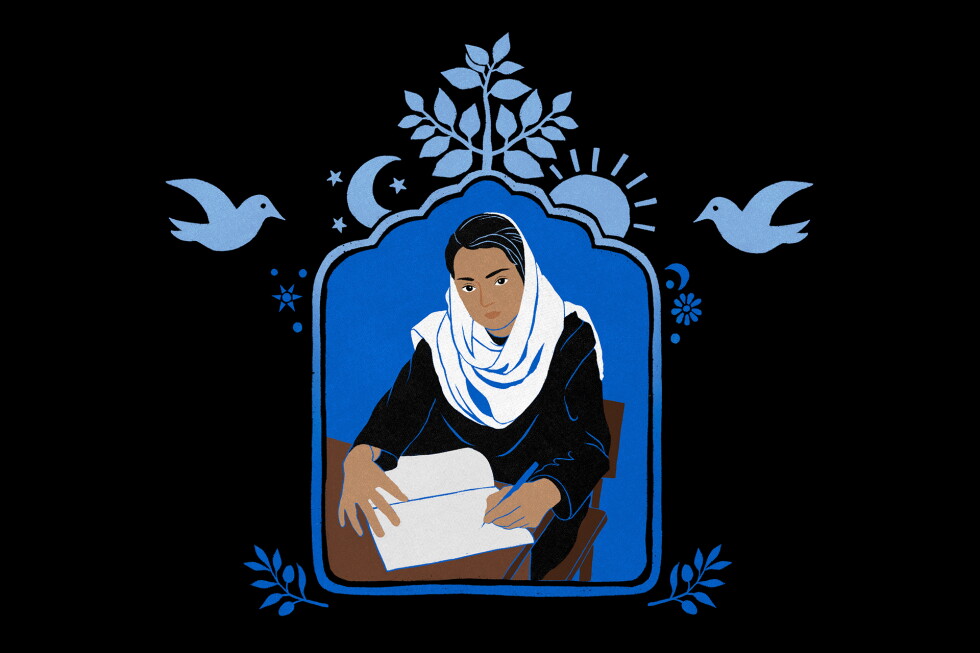
Five years after the Taliban took power, an estimated 2.4 million Afghan girls remain excluded from secondary education, the U.N. agency UNESCO said, renewing a call for the immediate restoration of their right to education, as reported by infohub.kz.
UNESCO, based in Paris, said the continued exclusion of women and girls from education amounts to a grave violation of their fundamental rights. "Afghanistan remains the only country in the world where girls and women are formally banned from secondary and higher education," Hoda Jaberian, UNESCO's program coordinator for education in emergencies, said in a video news conference. "Five years is not a temporary interruption in a child's education; it is clearly almost an entire secondary school cycle."
Jaberian stressed that UNESCO continues to call for the immediate and unconditional restoration of girls' and women's right to secondary and higher education. "It is not negotiable. It is a basic human right, and there is no substitute for this," she said.
The Taliban seized power on Aug. 15, 2021, as U.S. and NATO forces withdrew after two decades of war. Shortly after, they barred girls from secondary schools and later extended restrictions to higher education, employment, and other sectors, effectively excluding women and girls from public life.
Despite appeals from the United Nations, humanitarian groups, human rights advocates, and several Islamic countries, the Taliban has maintained the ban, insisting the issue is a domestic matter.
Jaberian said the restrictions are reversing two decades of progress Afghanistan had made in education. While access to schooling for girls was severely limited in 2001, by 2021 nearly 1 million girls were enrolled in secondary education. "Afghanistan had made really major progress in expanding girls' access to education," she said. "But unfortunately, much of that progress now has been completely reversed."
UNESCO has been supporting education in Afghanistan by running community-based education, literacy, and skills development programs. These classes take place in community spaces, often inside the homes of literacy facilitators, with the knowledge of the authorities. The agency said there are more than 1,000 literacy facilitators, most of them trained by UNESCO and its partners.
"While the restriction remains, we cannot abandon Afghan learners," Jaberian concluded. "UNESCO works with communities and our partners to preserve every possible pathway to learning."