

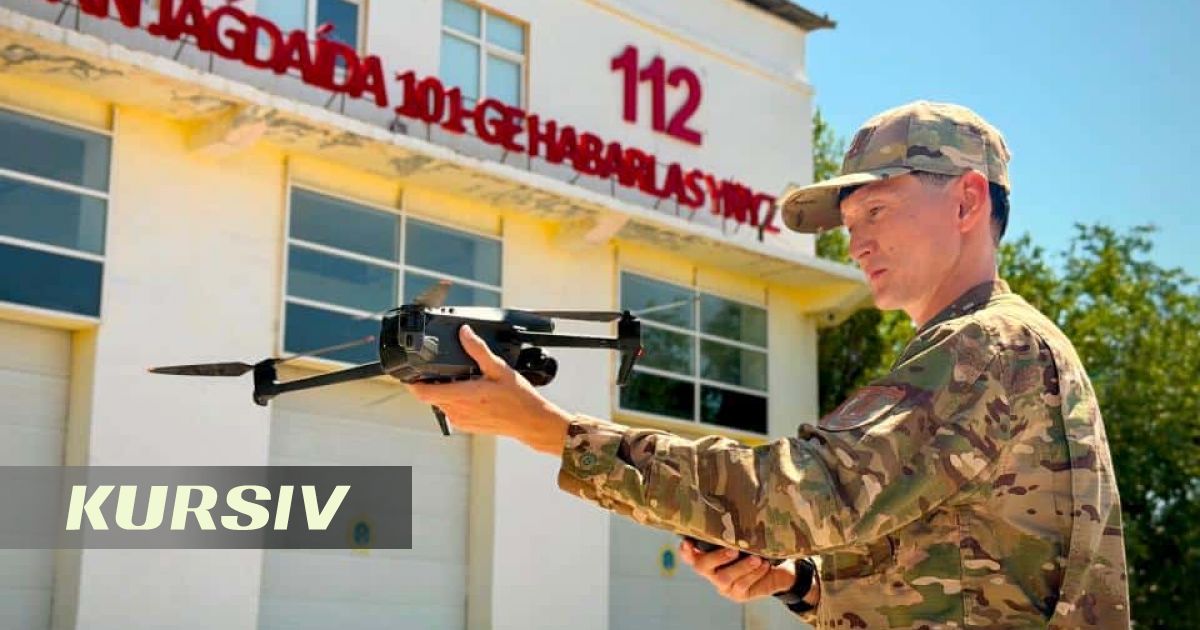
Kazakhstan's Emergency Situations Ministry operates 241 unmanned aerial vehicles, 185 of which are equipped with artificial intelligence functions. Since 2025 and the beginning of 2026, more than 5,000 operations have been carried out using UAVs, and 63 people have been rescued, reports infohub.kz.
Another 70 drones can operate autonomously without direct operator involvement. They are deployed in populated areas, at the Shymbulak ski resort, and on Lake Balkhash. Video data from them is transmitted around the clock to the ministry's operational control centers.
The drones are used for aerial visual monitoring, assessing the scale of incidents, and coordinating rescue efforts. Some are equipped with loudspeakers to alert the public and can also create maps of the area directly in the search-and-rescue zone.
A separate focus is water safety. 81 UAVs are used for daily patrols and monitoring. Of these, 33 have enhanced functionality, including thermal imaging and night vision capabilities.
These devices can detect people in the water at night and identify individuals in prohibited or unapproved swimming areas.
Since the start of the swimming season, evening and night patrols using drones have identified 150 people swimming at prohibited times or in potentially dangerous locations. After such cases are detected, rescuers and police officers are dispatched to the scene.
The ministry notes that combining drone technology with artificial intelligence expands the monitoring area, speeds up response to incidents, and strengthens preventive work.
Earlier, Kursiv reported that in 2026, drones began patrolling the Balkhash coast to enforce water safety rules. One such drone, equipped with a spotlight and loudspeaker, was captured on video demanding that vacationers leave the water at night. The clip sparked a lively reaction on social media: some users supported the surveillance, while others joked about a "revolt of the machines" and excessive monitoring. Swimming at night in public recreation areas is prohibited by safety regulations.