

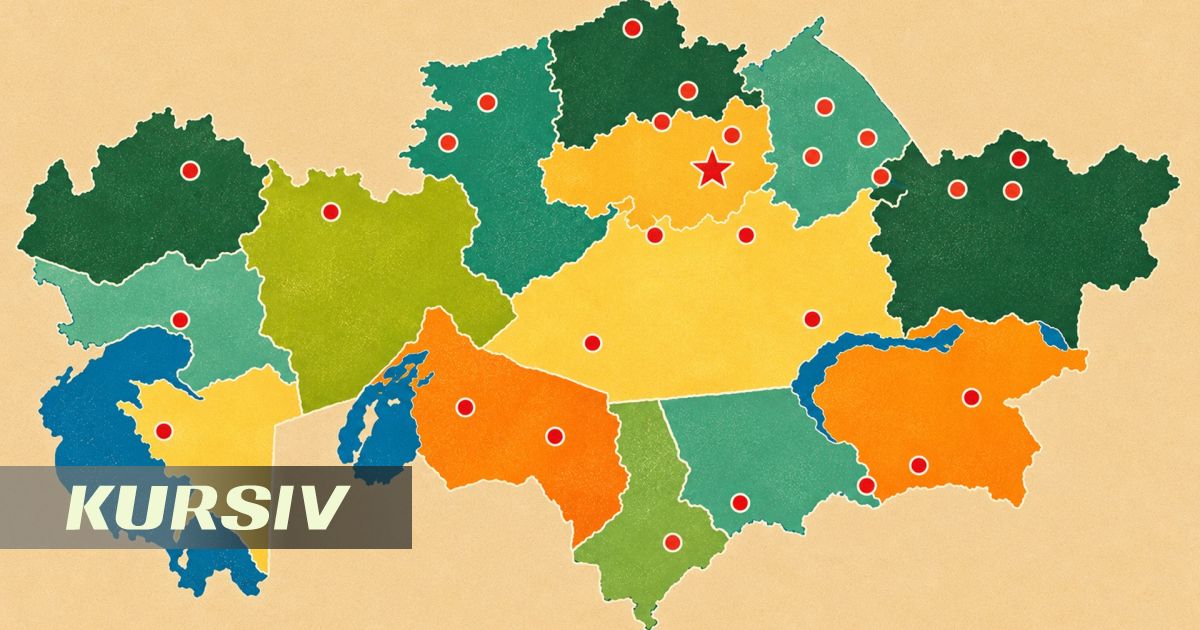
A dialogue with an artificial intelligence about which Kazakh city to choose for the next 50 years — considering global warming, ecology, and affordability — is spreading rapidly on social media. The neural network's answers sparked heated debate among users, according to infohub.kz.
The algorithm analyzed several cities across the republic, identifying key risks and advantages for each.
Ridder was described as "a climate refuge, not a place for a career." Among the pros: cool temperatures and abundant water in a warming world. Among the cons: the ecology of a company town (Kazzinc, a thermal power plant) and dead-end infrastructure.
Esik emerged as an option for a "dacha owner with residency registration" near Almaty without smog — but with a high risk of mudflows after glacier melt and seismic danger.
Semey was noted as an undervalued location with water from the Irtysh and mild winters, but with the risk of China drawing off water and weak healthcare.
"For a quiet life with water and no earthquakes, Semey will do, but for a career Astana is still more pragmatic," the AI said.
The neural network said it would not consider Balkhash as a primary place to live for 50 years. In its assessment, attractive prices and the expanse of the lake conceal serious risks: emissions from a copper smelter, the threat of the reservoir shrinking, summer heat up to +40C, and weak healthcare and a shortage of jobs. The algorithm added that this option is suitable at most as a summer dacha.
Kokshetau was called a very strong candidate for a calm life. The advantages cited were the absence of seismic threats and smog, proximity to Borovoye, and good water. According to the AI, warming will work in the city's favor by softening winters, and proximity to the capital compensates for local drawbacks. The only weak point named was a smaller labor market compared with Astana.
Taraz was characterized by the artificial intelligence as a suitable option for those who love warmth, noting its mild climate with virtually no severe frosts and a long growing season. At the same time, the AI warned of increasing summer heat, dust storms, and persistent seismic risk.
Pavlodar was called normal by the algorithm, but it pointed to the need for a serious compromise on ecology. The city was praised for its compactness, infrastructure, and access to the Irtysh, but the AI noted the region's record levels of industrial emissions and regular smog.
The biggest reaction came from the AI's answer to the question of what would happen if the entire country moved to the capital. The neural network stated bluntly that pulling all resources into the center would destroy the country's economy.
"Astana lives on taxes from oil, metals, and grain extracted in the 'uncomfortable' regions. No people on the ground — no extraction and no taxes, and empty lands near the borders will be economically filled by neighbors. Without decentralization, the capital with its lavender raf will be left without a cup," the neural network concluded.
Note that Kazakhstan has developed a paradoxical demographic picture. On the one hand, the country continues to maintain high birth rates: more than 227,000 newborns were registered in the first nine months alone. On the other, overall population growth since the start of the year has been a modest 0.58%, and 11 regions recorded actual population decline.