

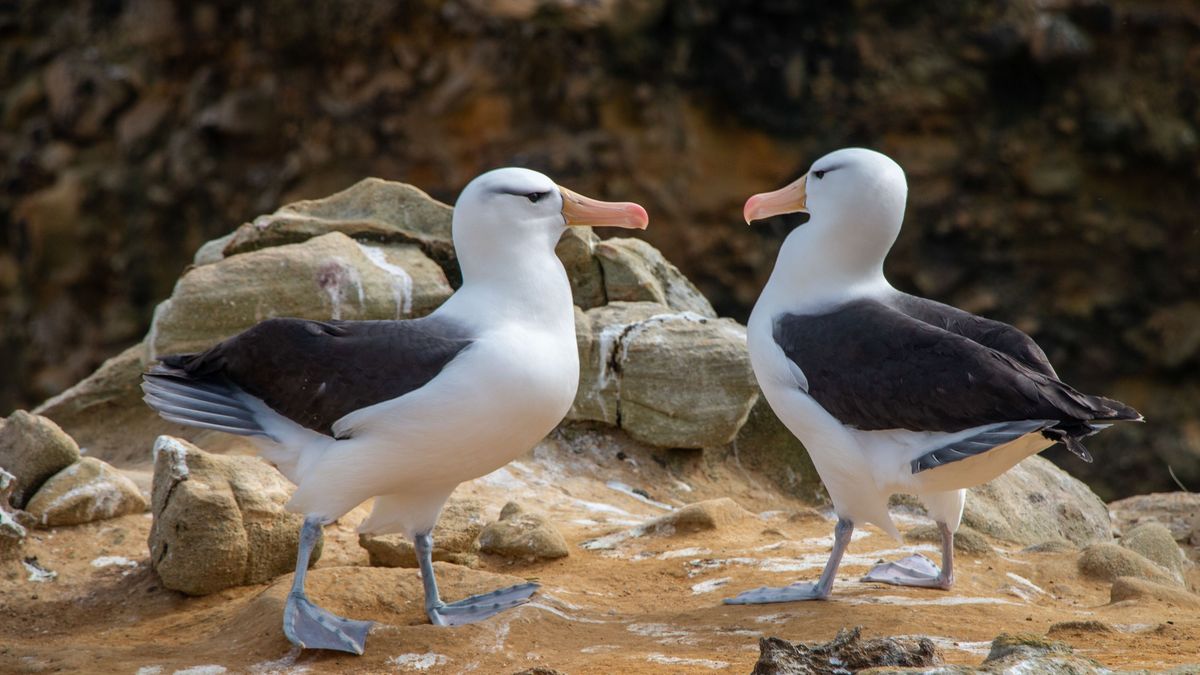
Black-browed albatrosses are unable to adapt to climate change as quickly as global temperatures are rising, scientists have concluded, according to infohub.kz.
As SciTechDaily reports, researchers from the Canadian University of Rimouski, along with international colleagues, studied the behavior of black-browed albatrosses in the Southern Ocean. These long-lived birds mature slowly and breed late, causing beneficial genetic changes to pass from generation to generation too slowly.
Computer modeling showed that beneficial traits are indeed passed on to offspring, but the overall population declines faster than advantageous traits can spread through most individuals.
Natural selection can help populations cope with gradual environmental changes, but rapid global warming completely negates these protective mechanisms. The only effective way to save rare species remains a large-scale reduction of greenhouse gas emissions.
According to the study's authors, only reducing anthropogenic pressure on the climate will slow the extinction of animals and give evolution a real chance to save wildlife.