

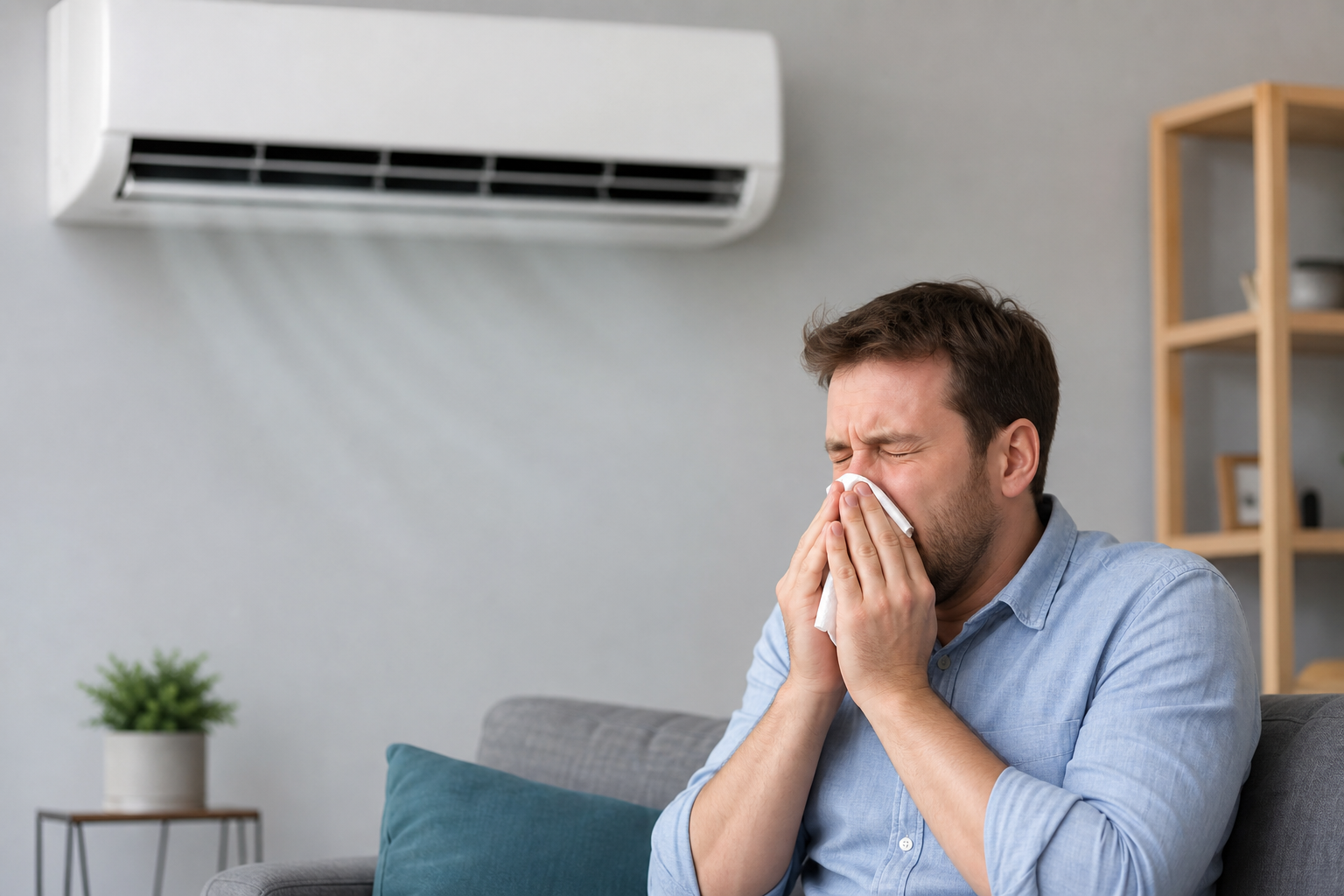
In the midst of summer heat, doctors report a sharp increase in patients with allergy-like symptoms: runny nose, sneezing, coughing and eye irritation. The cause, it turns out, lies not in the air conditioner itself, but in the pollutants that accumulate inside it, reports inbusiness.kz citing moslenta.ru.
Experts emphasize that so-called 'air conditioner allergy' is caused by microorganisms and allergens that build up in the cooling system. Doctors record a noticeable increase in patients with symptoms resembling an allergic reaction. Most commonly, people complain of nasal congestion, runny nose, red eyes, sneezing, coughing, and in some cases, asthma attacks. Many initially mistake these symptoms for a cold or seasonal allergies.
Allergist Ekaterina Chernyshova explained that the air conditioner itself cannot cause allergies. The danger comes from contaminants that accumulate in the cooling system over time. Inside the unit, bacteria, mold fungi can multiply, and dust can accumulate, often harboring dust mites — one of the most common household allergens.
Office workers who spend most of the workday in rooms with constantly running air conditioners are particularly affected. The most common complaints include nasal mucosal swelling, sneezing, coughing, and a feeling of discomfort in the airways.
To reduce the risk of such reactions, doctors recommend regular maintenance of air conditioning equipment. Filters should be cleaned every two to four weeks. Additionally, it is important to maintain optimal indoor humidity at 40–60% and regularly ventilate rooms to allow fresh air in.
Specialists remind that timely care of the air conditioner not only extends its lifespan but also reduces the likelihood of allergens and other microorganisms that can negatively affect health.