

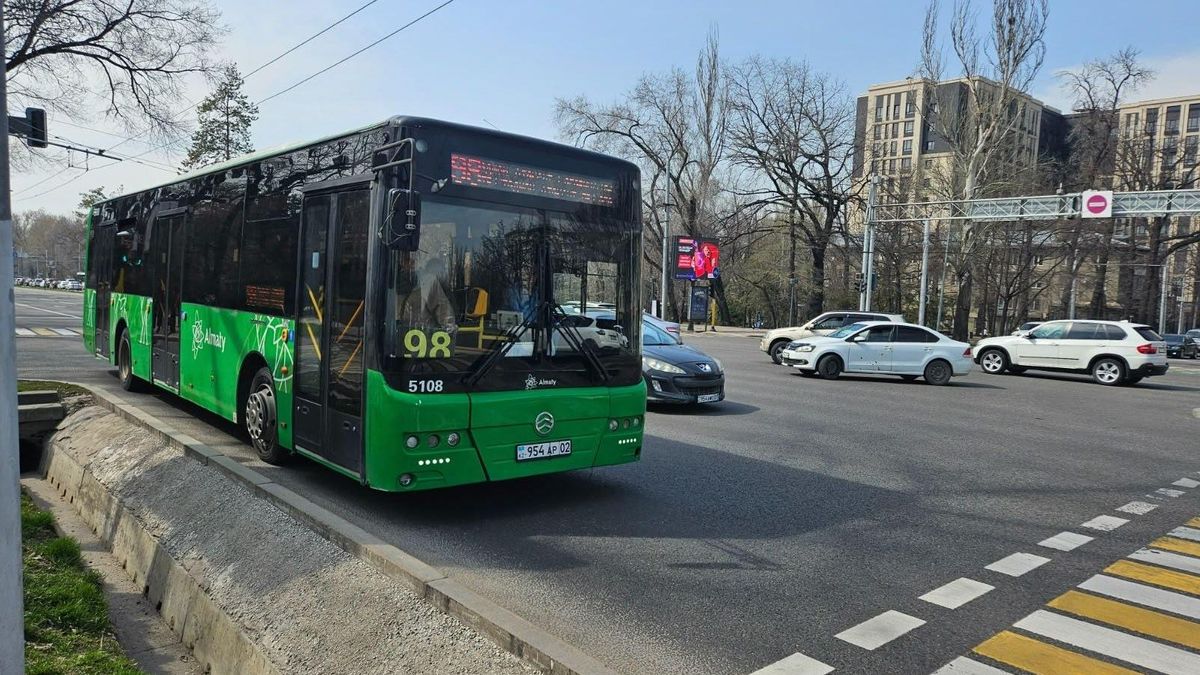
Almaty plans to build its bus schedules based on methodological recommendations from the Institute for Transportation and Development Policy (ITDP, USA) and Transport for London (TfL), the city administration said, according to infohub.kz. Officials outlined the changes ahead for public transport.
The city is currently analyzing bus route performance based on actual passenger flows, vehicle occupancy and service intervals. The goal is to review public transport subsidy costs, distribute rolling stock more efficiently and ensure transport accessibility across districts.
Almaty has 27 bus depots serving 210 routes. About 3,200 buses run daily, and passenger traffic exceeds 1.6 million people. Subsidy costs are rising: carriers' requests totaled 83.7 billion tenge in 2024 and 149.6 billion tenge in 2026. As a result, the components of the calculated tariff, including overhead and other costs, are being reviewed, and the distribution of transport work is being analyzed against actual passenger flows.
As part of this work, schedules were adjusted on 92 city bus routes without reducing the total number of buses. Suburban and mountain routes were not affected.
The administration cited international practice under which schedules are built around real passenger demand at different times of day and days of the week. This approach aligns with ITDP and TfL recommendations: service frequency increases during peak hours and the number of trips is adjusted when demand falls.
Of the 92 routes, 35 are served by the municipal carrier Almatyelektrotrans. Their actual volume of transport work has been preserved. Trips excluded from the subsidy calculation are operated at the company's own expense and receive no additional budget funding.
For the remaining 57 routes, an additional individual analysis of passenger flows, bus occupancy and service intervals is under way. Decisions on each route will be made jointly with carriers by the end of the year, taking into account the real needs of residents.
"At the same time, the dispatch system is being modernized and monitoring of control lines is being introduced, making it possible to track schedule compliance, service intervals and bus deployment. This is needed to strengthen control over carriers' operations, ensure timely vehicle maintenance, reduce the risk of breakdowns and promptly replace buses with reserve rolling stock. New subsidy rules for Almaty and the Almaty agglomeration are currently being developed. Various approaches are being considered, including models that take into account passenger flows, service regularity, fare payment completeness and service quality," the administration said.
The new model is expected to ensure a more balanced distribution of transport resources across routes and to take passengers' needs into account. It will also help maintain stable public transport operations while keeping budget spending economically justified.