

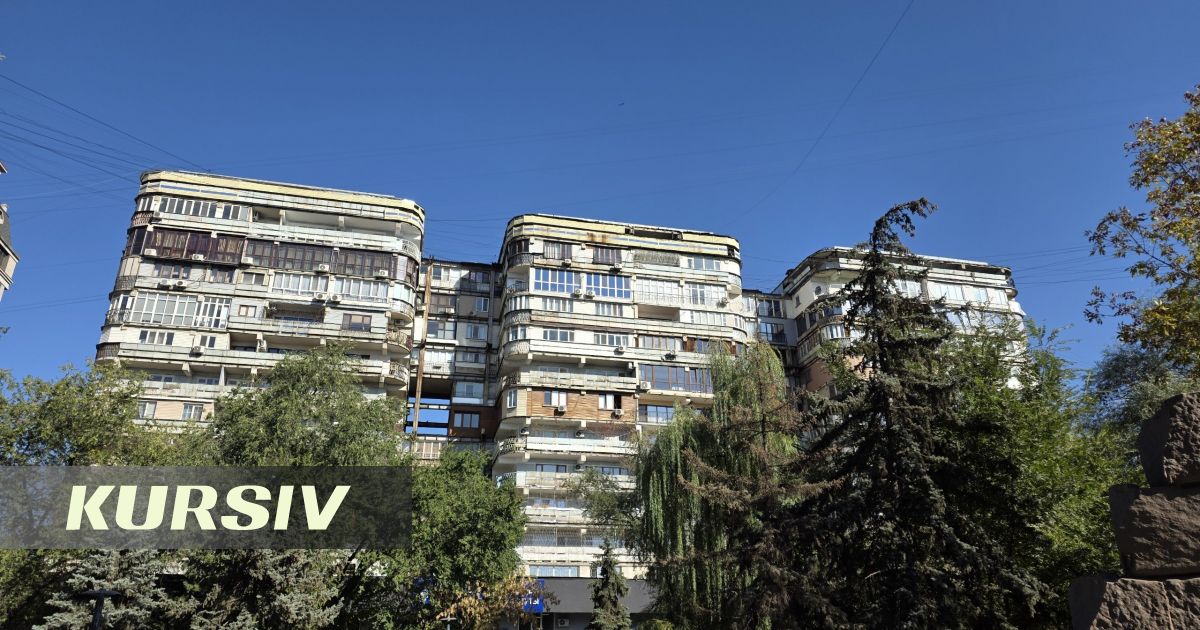
Almaty's city administration has suspended the reconstruction of the former Iskra cinema in the famous 'Three Bogatyrs' residential complex at 44 Dostyk Avenue. The climbing wall construction was proceeding without the necessary permits and design documentation, infohub.kz reports.
The inspection was unannounced. Based on its findings, the property owner, Zhasa Development LLP, was issued an order to rectify the violations, conduct a technical assessment of the building, and halt construction and installation work until all requirements are met.
"At the same time, the inspection established that the load-bearing structures of the building were not affected during the work, and no damage to their integrity was found. Residents were invited to the site, where officials from the department explained the inspection results to them," the Almaty administration said.
The owner will be able to resume work only after complying with the order and obtaining the necessary documentation.
Meanwhile, it has become known which company is behind the future climbing wall in the legendary buildings. It is Zhasa Development LLP, whose director is listed as Kaidar Azat Bekmyrzaevich. His page on the legal portal LegalPro also features user ratings, and they look rather grim: for every positive vote, there are 11 negative ones.
Recall that the 'Three Bogatyrs' complex appeared in Almaty in 1970–1971 and immediately became a city landmark. It received its popular name due to its massive and monumental appearance. Three 12-story towers are connected by a common stylobate and a metal frame that helps distribute seismic loads. In the lower part of the complex, the Iskra cinema with two halls seating 330 each opened in 1973, and above it were the Museum of Archaeology and the Institute of Archaeology. Later, the cinema closed, and its premises were used for other projects, including a fitness center.
Earlier, Kursiv LifeStyle reported that residents of 'Three Bogatyrs' raised the alarm after demolition began in the former Iskra, where a climbing wall was planned. According to them, heavy machinery was operating directly under the residential buildings, and the vibration was so strong that it was mistaken for an earthquake several times.