

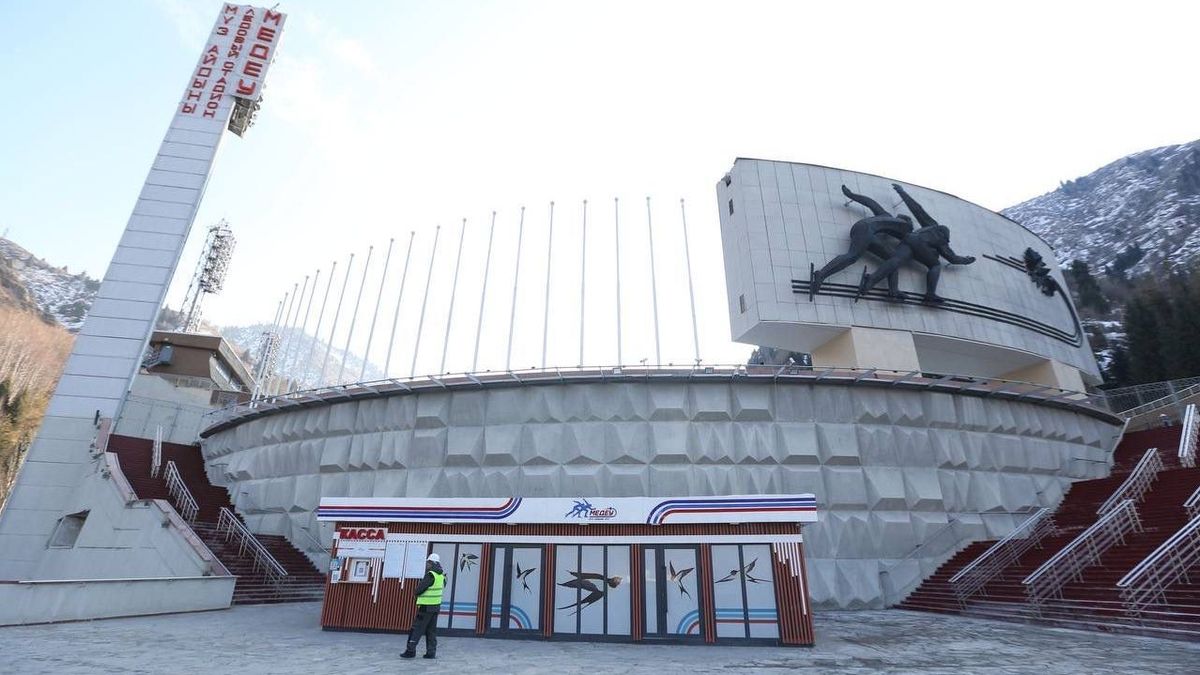
Deputies of the Almaty Maslikhat have backed a decision to restrict vehicle access to the specially protected natural areas of Medeu and the Shymbulak tract, the website infohub.kz reports.
In April of this year, it was already reported that car access to Medeu could be restricted in Almaty, and the possibility of expanding parking in the lower area was also under consideration. Yerkebulan Orazalin, akim of the Medeu district, spoke about this at the time.
The draft was presented at the session by Arshhat Bakhtygereyev, deputy head of the Almaty Department of Ecology and Environment. According to him, the restrictions are being introduced to reduce the transport and human-made burden on the specially protected natural area.
The new rules reportedly became necessary following a Constitutional Court ruling of June 12, 2026. The court found that the previous restriction, established by a 2016 akimat resolution, did not comply with the Constitution, stating that such decisions fall within the competence of the maslikhat and must take residents' rights into account.
"We propose not simply to preserve the previous order, but to establish a lawful mechanism for regulating transport load, taking into account the environmental situation, legal requirements and the rights of residents," Bakhtygereyev said.
According to the department, around 700 vehicles pass through the checkpoint every day. In the eight months of 2026, 179,024 crossings were recorded, compared with 76,606 for all of 2022.
"The adopted decision provides for restricting the entry of vehicles with internal combustion engines. A separate regime has been set for electric vehicles: on weekdays entry will be allowed, while on weekends and holidays the restriction will apply to all vehicles," the statement says.
The new order is said to take into account the interests of residents, as well as the work of emergency, operational, utility and special services. It is emphasized that the area contains 48 private houses, the service and residential buildings of Kazhydromet and Kazselezashchita, and facilities in the Tuyuksu tract.