

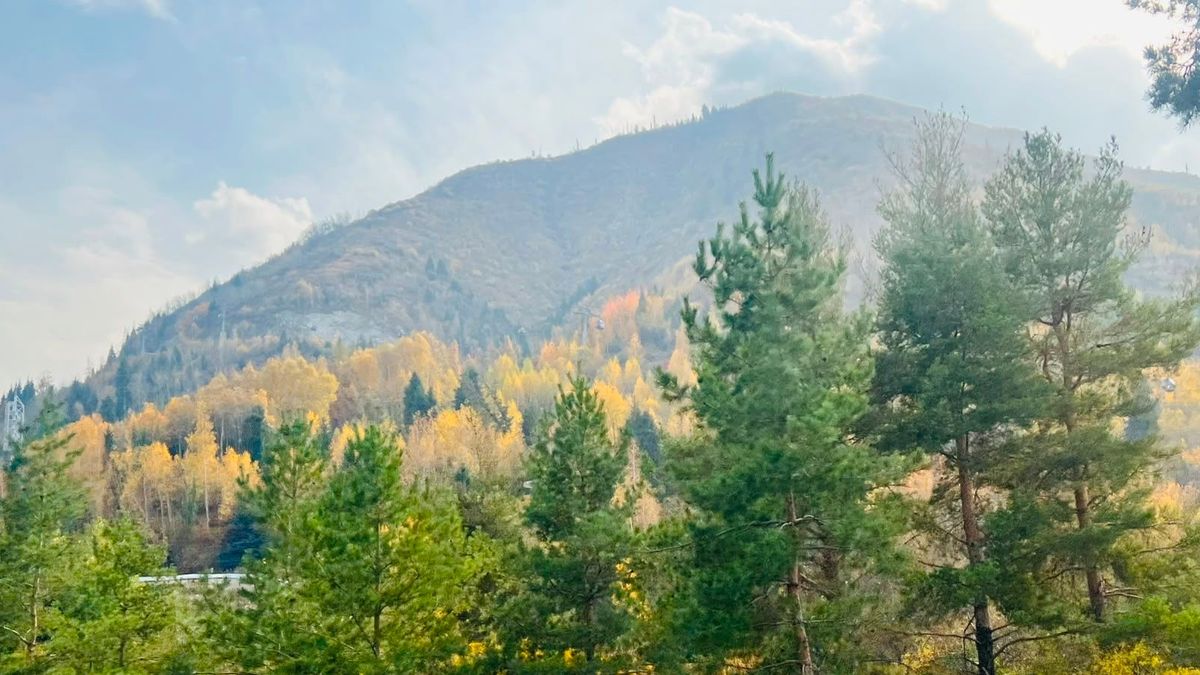
The Almaty Mountain Cluster spans five zones — Shymbulak, Kymasar, Butakovka, Pioner and Oy-Karagay. Infrastructure development here is planned with account for the specific features of each area and natural constraints, and one of the core principles is limiting the footprint of construction work. Design takes into consideration the terrain, slope stability and avalanche risk, Almaty Tau Management LLP says, according to infohub.kz.
According to Almaty Tau Management LLP, the operator of the Almaty Mountain Cluster project, the area affected by the project will amount to 0.049% of the total area of Ile-Alatau National Park. Yet even this localized impact requires compliance with environmental protection standards.
To minimize the impact, the area cleared is to be reduced to the minimum necessary. Vegetation is surveyed before work begins, with its species composition and condition identified. The project provides for compensatory planting using trees suited to mountain conditions, followed by care and monitoring.
When developing infrastructure, it is important to take into account animal habitats, their movement routes and seasonal patterns. To reduce the impact, ecological corridors at least 30 meters wide are planned between adjacent ski slopes, along with measures to limit noisy work during the bird breeding season and monitoring of the state of natural complexes.
According to Almaty Tau Management LLP, the Malaya Almatinka, Kymasar, Butakovka and the Kotyrbulak stream and their tributaries require particular attention. To prevent pollution, household wastewater is to be diverted through pipelines into the existing municipal sewer system. Discharging untreated wastewater into mountain waterways is strictly prohibited.
During construction, fuel and lubricants must be prevented from entering the soil and water, and measures must be taken against erosion. The use of water for technical needs, including artificial snowmaking, must comply with water use and water resource protection requirements.
The project provides for limiting the area of disturbed land, organized soil storage and prevention of soil contamination by petroleum products. Where a fertile layer exists, the possibility of preserving it and using it later is being considered. Disturbed areas are subject to technical and biological reclamation.
During construction, air impacts may stem from the operation of machinery and dust. To reduce them, properly maintained equipment and work organized with account for natural conditions are important. During operation, transport and engineering equipment may become additional sources of impact.
The project provides for separate waste collection, temporary accumulation in designated areas and transfer to specialized organizations for recycling or disposal. At every stage of construction, particular attention is paid to preventing environmental pollution: uncontrolled accumulation of waste is ruled out, and systematic removal and proper organization of work at construction sites are ensured.
Environmental monitoring makes it possible to track the state of the environment, identify possible deviations and take the necessary measures. Control is important both during construction and after facilities are commissioned.
According to Almaty Tau Management LLP, developing the Almaty Mountain Cluster requires an integrated approach in which infrastructure tasks are considered alongside nature conservation. Minimizing the impact area, surveying vegetation, compensatory planting, protecting water resources, preserving animal habitats and controlling waste management make up the environmental protection system of the Almaty Mountain Cluster.