

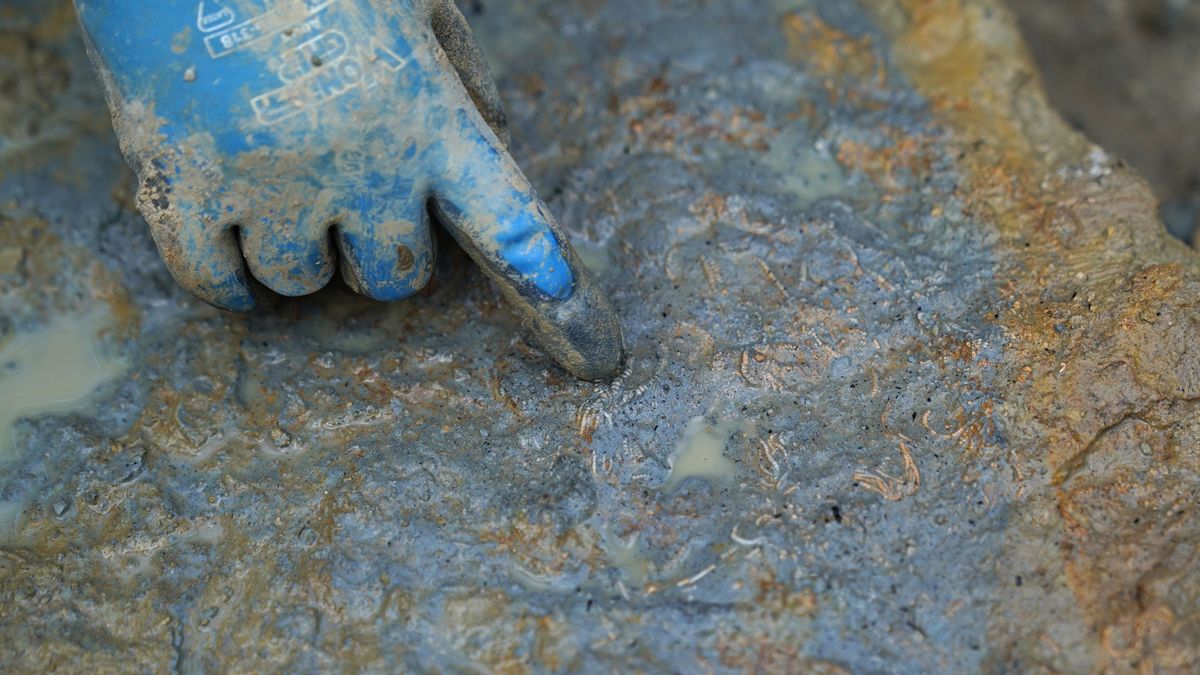
Paleontologists have discovered a unique fossil of a sea lily with preserved ambulacral feet, dating back about 450 million years. These ancient relatives of starfish resembled flowers growing on stalks underwater, reports infohub.kz.
Researchers from the University of Oklahoma studied an exceptional specimen of the fossil species Dendrocrinus simcoensis, housed in the collection of the Museum of Paleontology and Evolution in Montreal. The fossil preserves soft tissues—ambulacral feet, which echinoderms use to capture plankton and feed. This is only the second documented case of soft tissue preservation in sea lilies in the history of paleontology, and the oldest known.
The study's authors, Dr. Lina Cole and Dr. David Wright, noted that such tissues typically decompose first, and their mineralization is possible only under exceptional environmental conditions. Comparative analysis showed that the anatomy and arrangement of the feet in the ancient organism differ significantly from modern species. This discovery allows scientists to better understand the evolution of feeding strategies and ecological niches of the earliest inhabitants of Ordovician coral reefs.