

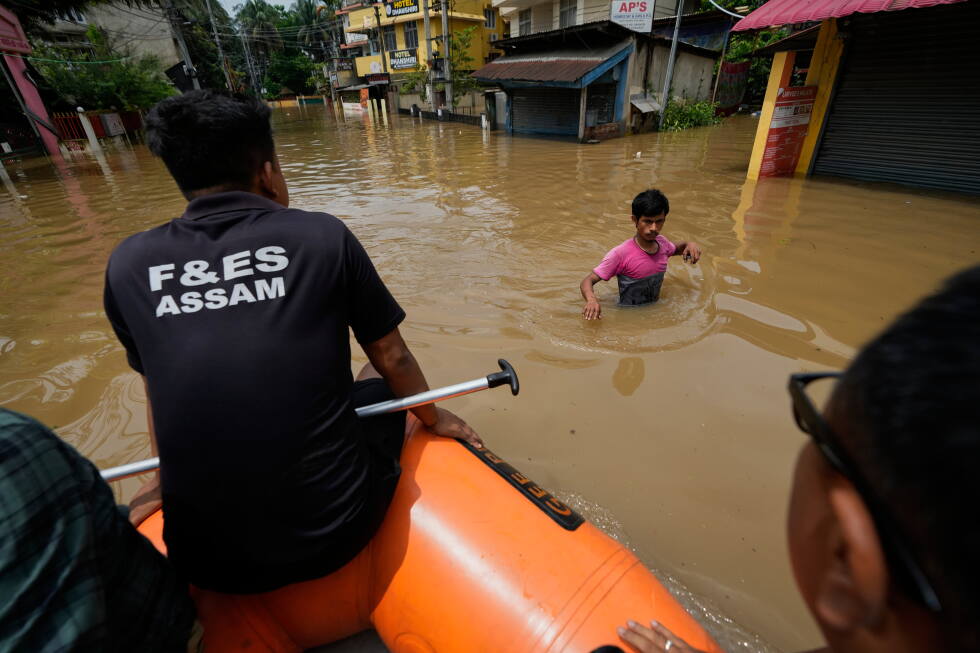
In India's Assam state, the death toll from flooding is rising. More than 100 people have died in this year's monsoon season, according to state officials, who described it as the worst flooding in about six decades. Experts say intense rainfall, sand mining, deforestation, wetland loss, and urbanization are making floods more unpredictable and destructive. They urge strengthening prevention measures and improving early warning systems.
The floods have displaced more than 700,000 people. Although many residents have returned home, thousands remain in relief camps. In villages along the Dikhow River, water levels rose from knee-deep to neck-deep in about 30 minutes, leaving people no time to escape. Residents say there was no warning.
Experts say that instead of relying solely on engineering structures, restoring natural ecosystems such as forests, wetlands, and floodplains can improve water absorption. They also call for better early warning systems and community preparedness.
The Indian government is expanding flood forecasting, but researchers emphasize that information must reach residents. Often, warnings stay at administrative levels and do not reach the public. Therefore, prevention measures must be strengthened to ensure people's safety.
According to a report by World Weather Attribution, the flooding in Assam was worsened by rapid urbanization, deforestation, and local vulnerabilities. Experts say we must learn to live with rivers and adapt naturally, including restoring wetlands and taking proactive action before floods strike.