

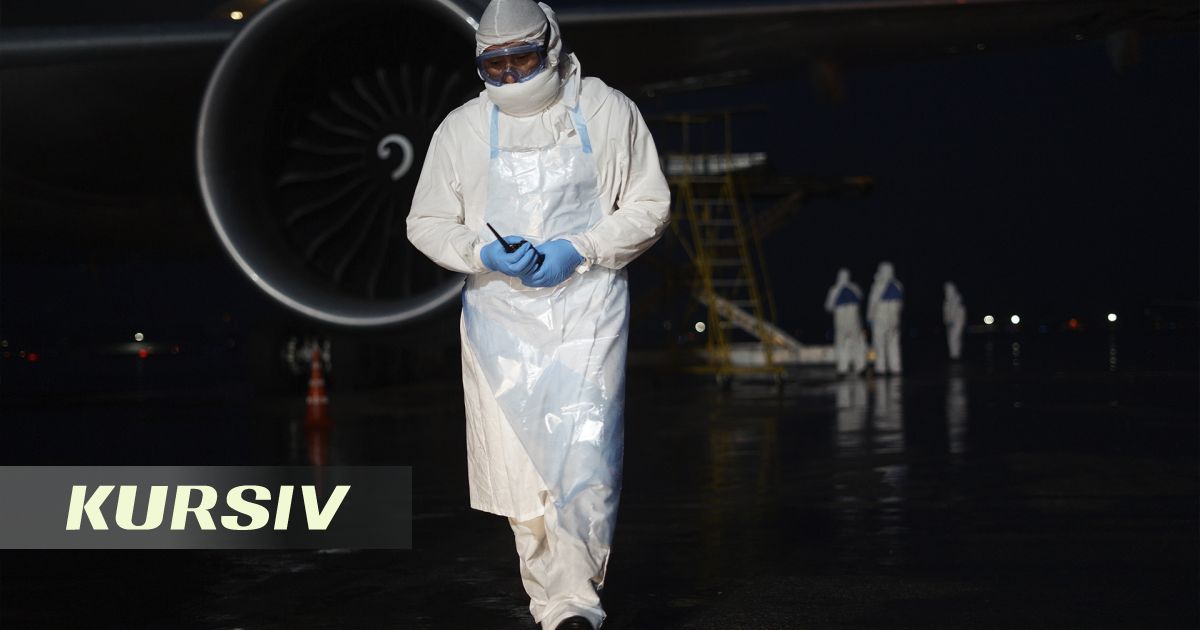
A practical drill simulating the detection of highly dangerous infections took place at the international airport of Kazakhstan's capital. The National Center for Public Health (NCPH) tested the readiness of emergency services for the possible importation of deadly viruses into the country, reports infohub.kz.
According to the drill scenario, an infected passenger was on board an aircraft. Medical personnel had to urgently isolate the patient, trace contacts, and disinfect the aircraft.
"The isolation of the sick person, directing the aircraft to a sanitary parking area, identification of contacts and their medical observation, disinfection, prompt notification and interaction of the services involved were practiced," the statement said.
In addition, specialists from the NCPH operational center presented the current epidemiological situation on Ebola fever in the Democratic Republic of the Congo and information on the characteristics of the Bundibugyo virus.
It is noted that the drill was conducted smoothly and allowed testing the readiness of all services for the possible importation of highly dangerous infections.
According to the DRC government as of September 12, the number of infected in the republic reached 7,022 people. 3,398 patients died, and 1,671 recovered.
Recall that the World Health Organization previously warned that a shortage of qualified medical workers, operational partners, and funding is hindering efforts to stop the spread of a new Ebola strain. The problems are becoming more serious as the outbreak's geography expands.
Earlier, "Kursiv" wrote that 5,000 medical workers are needed to combat the Ebola epidemic.
It was also reported that the current outbreak, caused by the Bundibugyo variety of the Ebola virus, has become the largest and deadliest in Congo's history.