

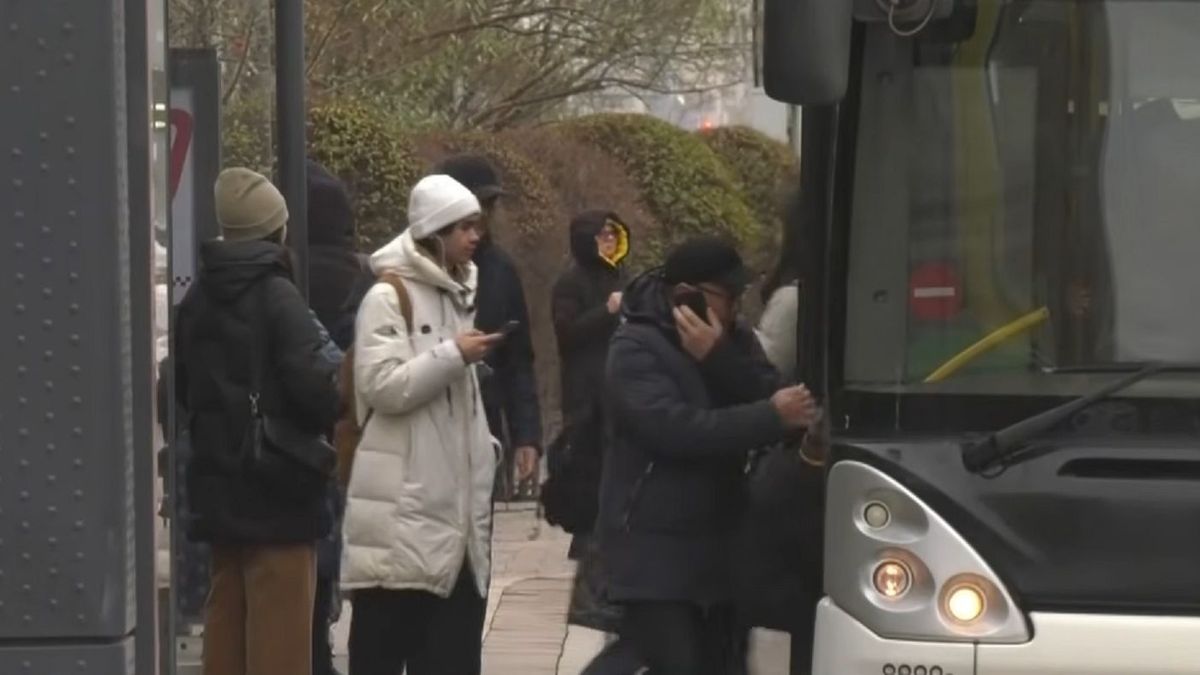
A scandal has erupted in Astana over an inspector who blocked fare payment as passengers boarded a bus and identified three fare dodgers, the website infohub.kz reports.
According to Channel 31, the inspector in Astana blocked payment the moment he entered the bus. As a result, passengers who had not yet managed to pay for their ride found themselves in violation. The situation drew mixed reactions. One man reacted angrily to the inspector's actions, shouting and waving his arms. Another female passenger was also outraged and shared her story on social media.
Opinions were divided in the comments. Some users backed the inspectors: “This practice should be introduced permanently! Turn off payment and make them pay a fine. We're sick of these freeloaders.” Others shared their own negative experiences: “This happened to me — the inspectors got on the bus with me. I hadn't even had time to scan the QR code when they blocked the card and started demanding that I get off with them. I was so upset.” One comment offered an explanation from an inspector's perspective: “I once asked an inspector, ‘Why don't you just get on quietly and check?’ She replied, ‘Why should I have to listen to insults? I can't stand hearing it anymore — let them pay while I'm walking through.’”
The transport management operator said the inspector was following procedure. “Under the public contract, when monitoring fare and baggage payment on public transport, an authorized employee of the system operator uses a handheld terminal. Before starting the fare check and validation, the authorized employee switches the terminal into inspection mode, which blocks the ability to pay by QR code, transit card and bank card,” City Transportation Systems LLP explained.
The company added that if a passenger has not paid for their ride or baggage, the inspector has the right to call the police or escort the violator to the nearest station for administrative action.
After the incident, some social media users suggested introducing payment at the entrance to the vehicle. Such a system, for example, has been introduced in Kostanay. “During peak hours there are crowds, but the system processes quickly and you pay by card or QR code as you board. It has become the norm, and many people are used to it. When someone goes into a shop or supermarket, they don't get the goods until they pay. It's the same with public transport,” said Yuri Panasenko, deputy director of the Kostanay transport company.
However, how effective such a system would be in major cities with heavy passenger flows remains an open question. In any case, experts note that fare evasion must be tackled, but it is also important to respect passengers' rights and protect inspectors from aggression and attacks.