

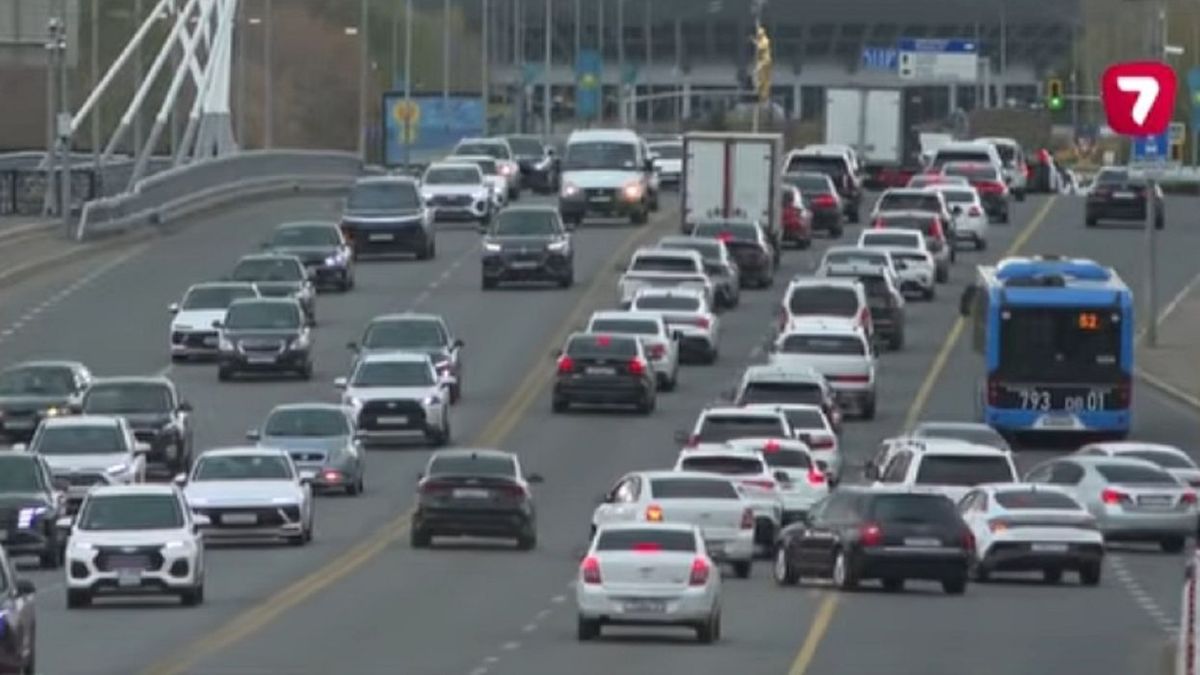
Astana has decided to fight traffic jams with transport modeling: virtual models of streets allow officials to test the effectiveness of new interchanges and additional lanes before any real-world changes are made, the website infohub.kz reports.
As Channel Seven reported, the capital is now trying to beat congestion with digital technology. Specialists create virtual models of the capital's streets and calculate in advance how new interchanges and additional lanes will affect traffic. In effect, the roads are stress-tested before any real changes begin.
“During rush hour traffic here literally comes to a standstill, and drivers can sit in jams for hours. Now they are trying to solve the congestion problem with transport modeling. Specialists recreate traffic on a computer to calculate in advance which changes will help relieve the roads,” the TV channel's report said.
According to specialists at the Traffic Management Center, they reproduce traffic flows. This makes it possible to test different scenarios without experimenting on real roads.
“We use four criteria: delay, speed, density and flow. And we build two models: the first is the situation before, that is, the current situation, and the second is after our changes, whatever changes we want to make. And in the end we compare them across these four categories,” explained chief specialist Askar Abylakhatov.
Since the start of the year, the Center has developed more than a hundred traffic and parking management schemes. These involve not only redistributing lanes but also changing turning maneuvers, road signs and markings. The goal is to increase the capacity of streets without large-scale road expansion.
“In Astana at the moment there are errors in design when it comes to distributing lanes across the road network, that is, in some places there are too few lanes, in others too many. In this case we cannot — there is no optimal balance in design, and sometimes there is not enough width to introduce bus lanes,” said Adilbek Yesmukhanov, head of the traffic management department at the Traffic Management Center.
According to the specialists, drivers themselves create additional difficulties. Cars parked incorrectly or left under no-parking signs narrow the roadway and impede traffic. That is why even a well-calculated scheme cannot always solve the problem without compliance with the rules.
Exactly when capital drivers will feel the results, the specialists do not say.