

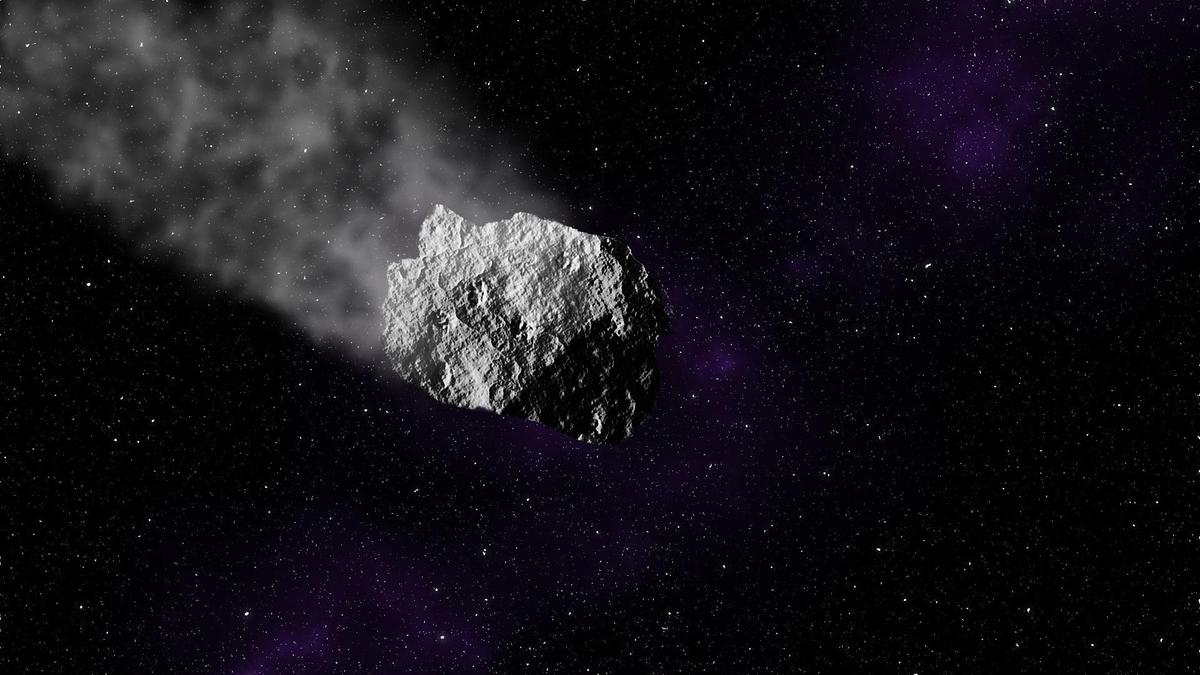
Around 43–46 million years ago, a 160-metre asteroid struck the floor of the North Sea and triggered a tsunami more than 100 metres high, infohub.kz reports.
Geologists led by Uisdean Nicholson of Heriot-Watt University have settled a long-running debate over the nature of the Silverpit crater. The three-kilometre-wide feature lies beneath 700 metres of seabed sediment about 130 kilometres off the coast of England. It was discovered back in 2002 but was long thought to be the result of shifting salt layers or a collapse caused by volcanism.
Its cosmic origin was confirmed through high-resolution seismic surveying and microscopic analysis of rock from an oil well. The samples contained crystals of deformed quartz and feldspar, which form only under enormous impact pressure.
Modelling showed that the object struck at a shallow angle from the west. The impact hurled a column of water and rock 1.5 kilometres into the air, and the collapsing mass of water then generated a giant wave.
The Silverpit discovery is particularly valuable to science because only about 33 underwater impact craters are known on Earth. Tectonic plate movement and erosion destroy most such traces, and the surviving structure will allow scientists to better study the effects of asteroids striking the ocean.