

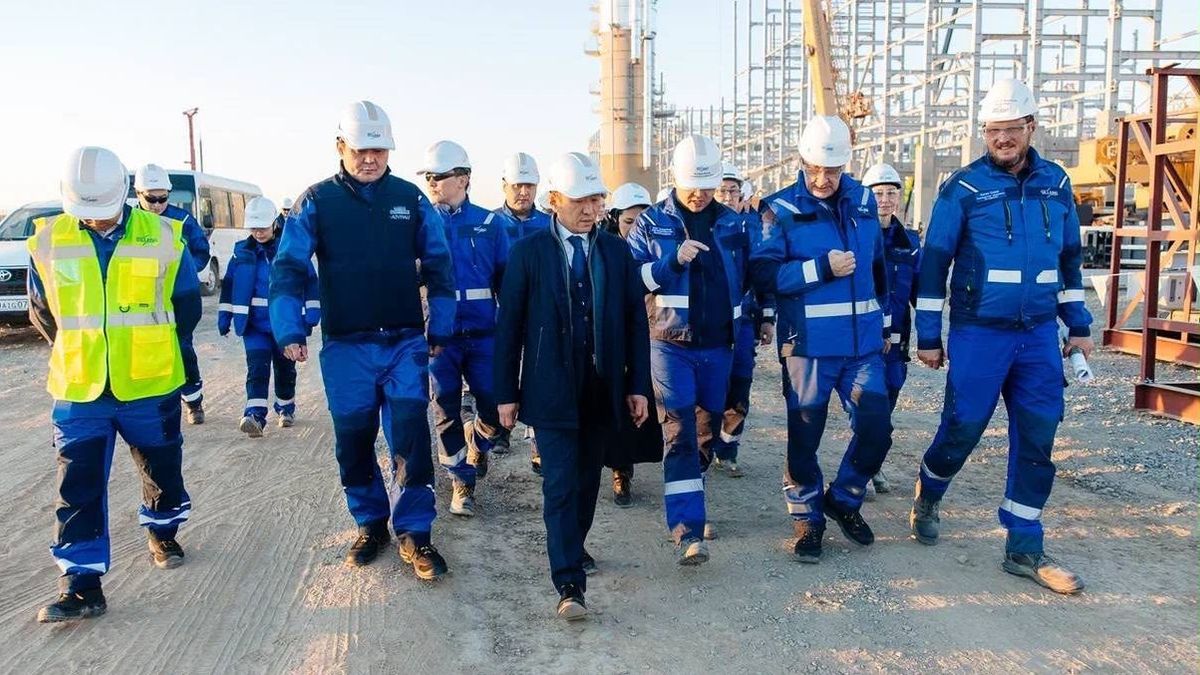
Construction of the Silleno polyethylene plant, with a capacity of 1.25 million tonnes per year, is continuing in the Atyrau Region. Regional Governor Bolat Akchulakov reviewed the progress of the works during a working visit, as reported by infohub.kz.
The visit covered the pace of construction and installation work, the future plant's power and water supply, and the participation of Kazakh companies in the project. Mukhtar Avutbaev, General Director of Silleno LLP, presented information on the current status of construction and the installation of process equipment. Overall project progress currently stands at 40.9%.
Work is under way at the pyrolysis, polymerization and utilities facilities. The first large-scale ethylene fractionation column, 101.8 metres tall, has been installed in its design position. Installation of furnaces and cryogenic tanks is continuing, along with the construction of production facilities and engineering infrastructure.
Bolat Akchulakov paid particular attention to the future plant's power and water supply. The governor instructed that calculations of the enterprise's maximum electricity demand and the technical documentation for the power equipment envisaged by the project be submitted.
"We need to see the full picture: on the basis of which documents and taking into account which equipment the electricity demand has been calculated. If our own resources prove insufficient, this could create serious problems. Importing electricity is expensive, so it is important to understand in advance where we will get the necessary volumes. The same approach should apply to water supply," Bolat Akchulakov stressed.
In addition, the regional governor instructed that infrastructure facilities be brought into compliance with established requirements. In particular, the construction of a permanent building for a police post on the project site was discussed.
More than 5,000 people and over 500 pieces of special equipment have been mobilised at the construction site. At the peak of construction, around 15,000 workers are expected to be involved.
Once the plant is commissioned, more than a thousand permanent jobs will be created. Training of future personnel is already under way: a pool of young specialists is being formed from university and college graduates, including in the Atyrau Region.