

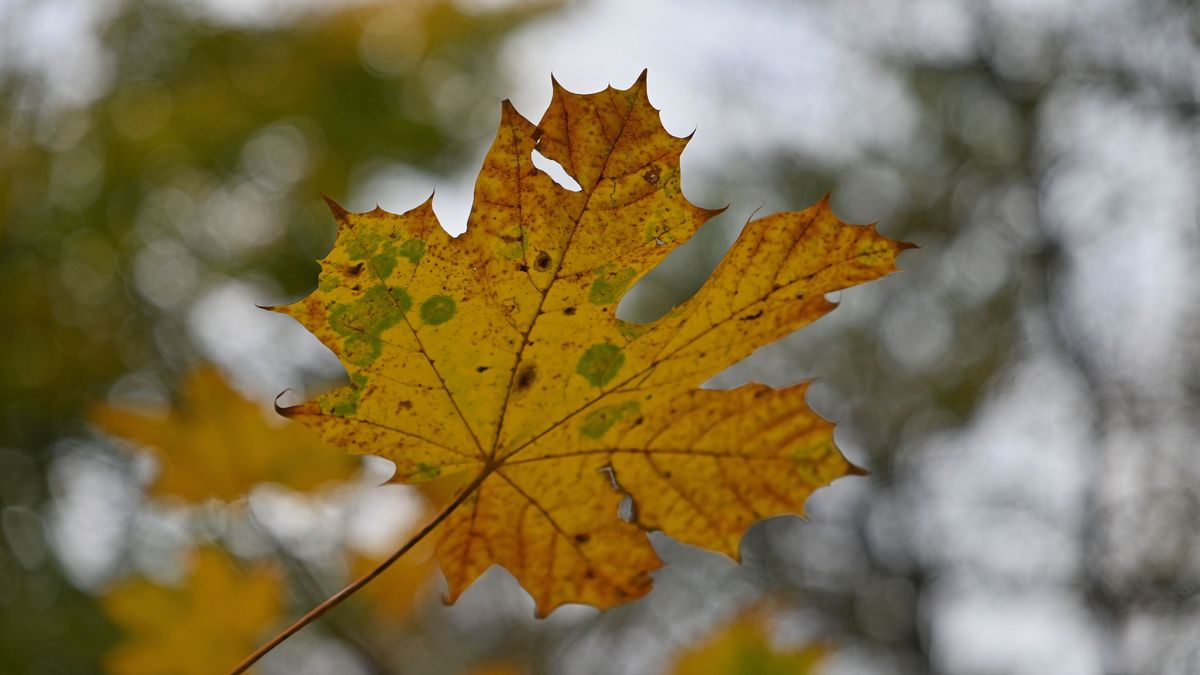
A chemical imbalance between nitrogen and phosphorus inside plant cells causes trees to change color before cold weather sets in, Earth.com reports. A team of ecologists led by specialists at Duke University reached this conclusion after studying 25 forest areas from Alaska to the Hawaiian Islands, according to infohub.kz.
The start of leaf fall is usually attributed solely to weather: shorter daylight hours, falling temperatures and rainfall amounts. However, the researchers found that the internal composition of foliage plays an equally important role. In 20 of the 25 forests studied, plots with elevated nitrogen relative to phosphorus lost their green color noticeably earlier than the rest.
To collect data, the project's authors used aircraft equipped with hyperspectral cameras and detailed satellite imagery. Special scanners captured sunlight reflected from tree crowns across hundreds of narrow bands, making it possible to accurately assess nutrient concentrations without manually collecting leaves. Satellite images helped pinpoint the moment when chlorophyll levels in the crowns fell to their seasonal minimums. The pattern held even after adjustments for elevation, tree species and weather conditions.
According to the study's authors, a shortage of phosphorus disrupts energy transport within cells, accelerating the breakdown of the green pigment. Human activity and fertilizer use cause excess nitrogen to accumulate in the environment, upsetting the natural balance. Early leaf fall is dangerous not only for the trees themselves: plants stop absorbing carbon dioxide prematurely, reducing the ability of forests to curb climate change.