

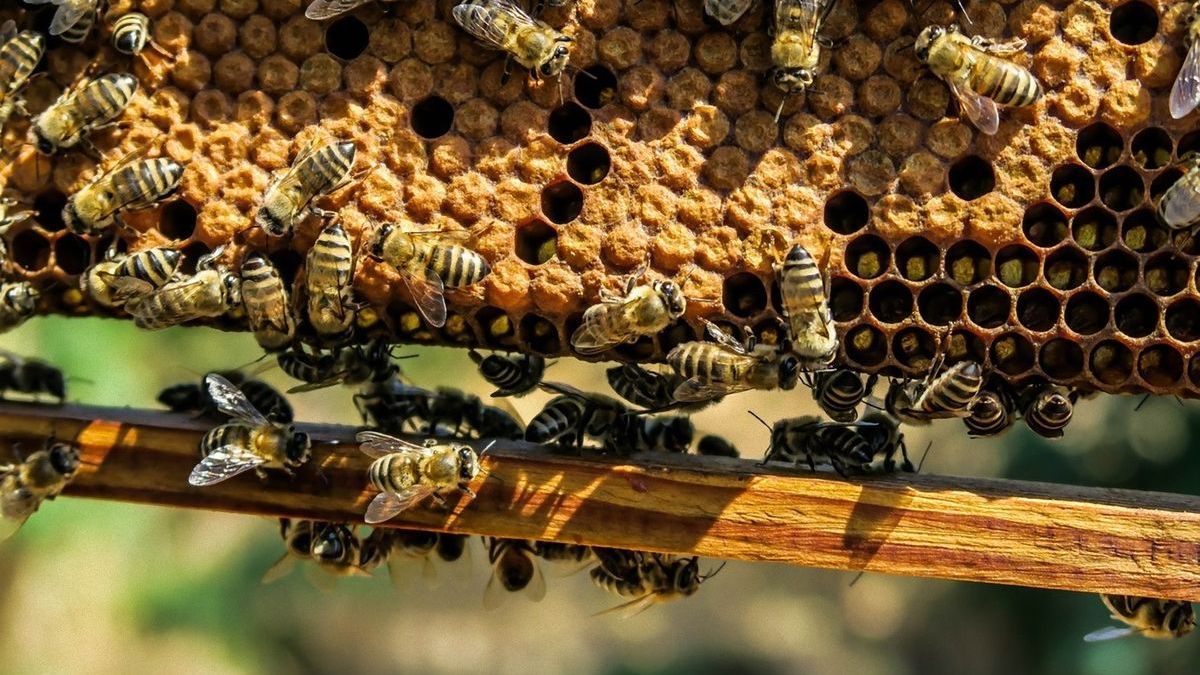
Researchers at the University of Konstanz have developed a decision-making algorithm for swarms of autonomous robots based on the behavior of honeybees when searching for a new hive, reports infohub.kz.
The findings of the German scientists were published in the journal Nature Communications. The development addresses a key challenge for autonomous swarm systems operating in disaster zones and environmental monitoring, where corrupted information or malfunctioning individual units can confuse the entire group.
The biologists drew inspiration from the cross-inhibition mechanism used by honeybees when choosing a nesting site. Instead of directly copying incoming data, a robot temporarily blocks its current decision before accepting new information. This pause prevents constant switching of decisions due to conflicting signals.
Experiments showed that cross-inhibition allows robot swarms to make faster and more accurate collective decisions as the group scales. The authors found that a moderate amount of unreliable data is even beneficial for the system, as it protects the swarm from choosing an erroneous option.