

After covering 10 billion kilometers, the BepiColombo spacecraft has closed in on Mercury and is preparing to enter its orbit. The journey to this enigmatic planet is a joint project of the European Space Agency (ESA) and the Japan Aerospace Exploration Agency (JAXA), infohub.kz reports.
The spacecraft will face extremely harsh conditions: Mercury is the planet closest to the Sun, and temperatures on its surface can reach +430 °C during the day and drop to −180 °C at night. In addition, the planet is constantly exposed to intense solar radiation.
The BepiColombo mission could help solve Mercury's major mysteries. Scientists hope to determine why ice persists in the planet's craters despite its proximity to the Sun, and to understand the origin of the mysterious hollows that dot Mercury's surface.
"I think Mercury gets unfairly little attention among the inner solar system planets, but that's also one of the reasons that make it interesting to study," says Professor Emma Bunce of the University of Leicester, one of the mission's lead researchers.
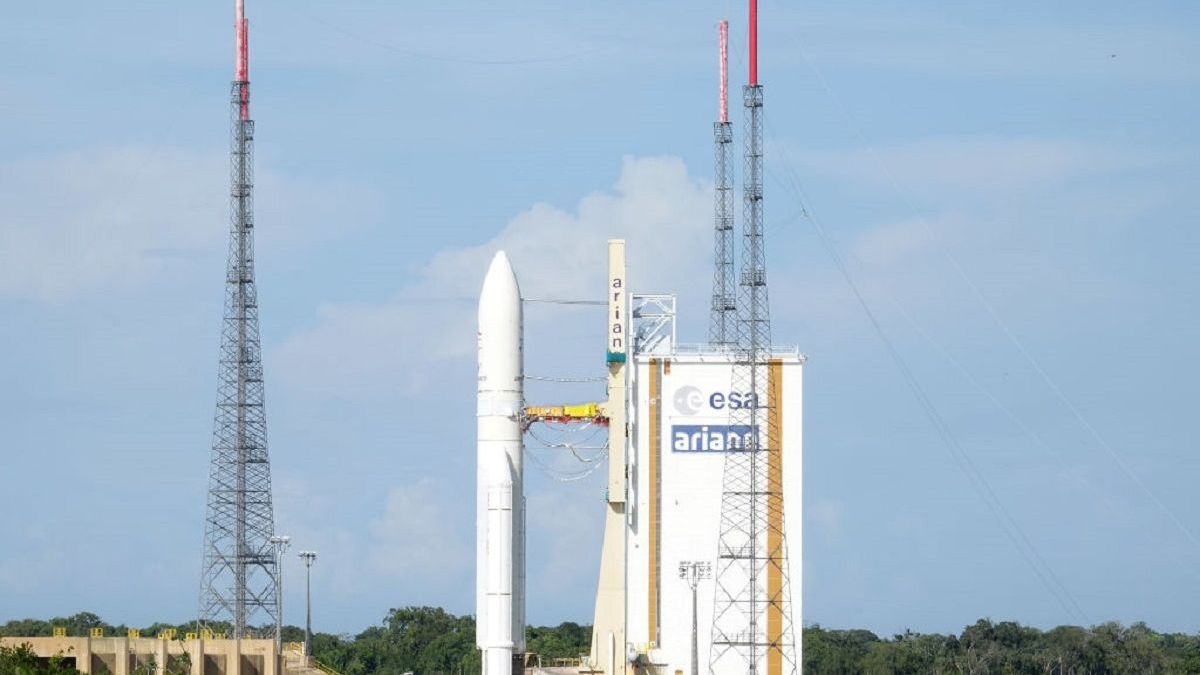
BepiColombo was launched in 2018 from a spaceport in French Guiana. Reaching Mercury was no easy feat: because of the Sun's strong gravitational pull, the spacecraft had to constantly adjust its speed and trajectory.
Throughout its journey, BepiColombo had to brake continuously. To do so, the spacecraft flew past planets several times, using their gravity to slow down and change direction. Over eight years, it flew by Earth once, Venus twice, and Mercury six times.
The riskiest maneuver awaits the spacecraft as it enters Mercury's orbit. BepiColombo will need to reduce its speed within 11 minutes enough for Mercury's gravity to capture it in orbit. If something goes wrong, it could simply fly past the planet.
Until now, only two spacecraft have approached Mercury, both under NASA missions. In the 1970s, Mariner 10 flew past the planet three times. In 2011, the MESSENGER spacecraft entered Mercury's orbit and operated there for four years. Thanks to it, scientists discovered ice in craters near the planet's poles. It also revealed that Mercury's magnetic field is offset from the planet's center by about 10% of its radius.