

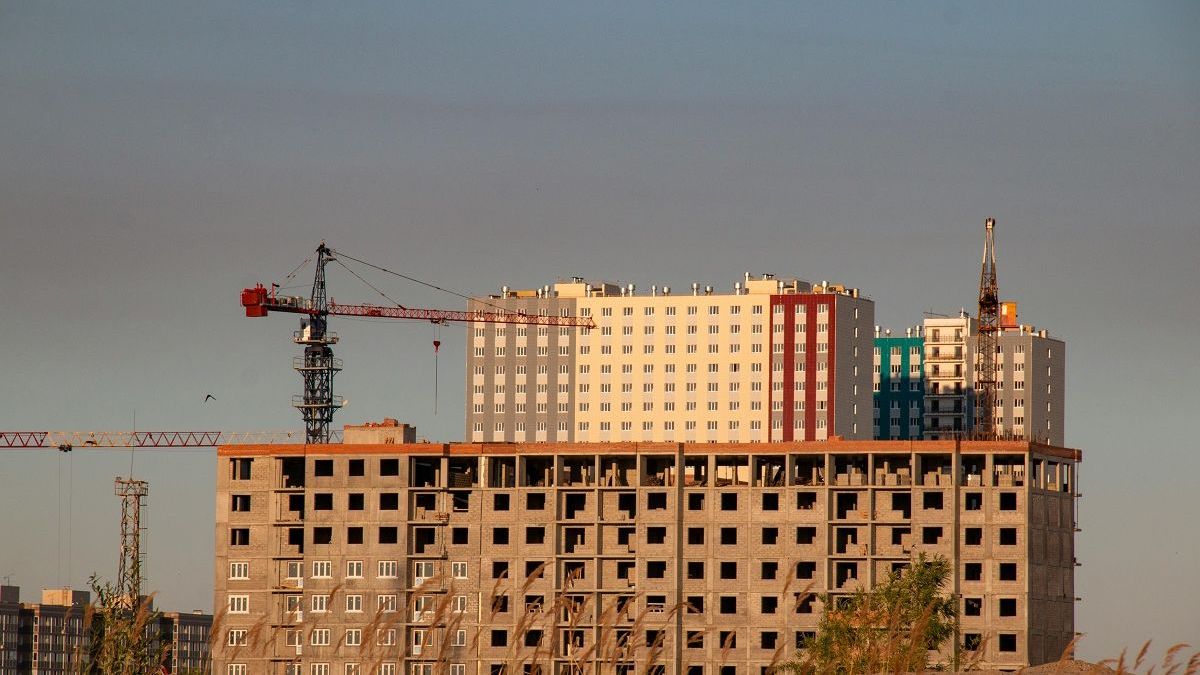
Nearly 40% of Kazakhstan's territory lies in seismically hazardous areas, and more than a thousand earthquakes have been registered in the country since the start of the year — eight of them felt at magnitudes of two to four. Against this backdrop, Deputy Prime Minister Qanat Bozumbayev has ordered tighter control over the seismic resilience of buildings, inspections of facilities in hazardous areas and the creation of a digital seismic risk database, infohub.kz reports.
The instructions were issued through the Committee for Emergency Situations Prevention. The need to ban construction in tectonic fault zones and foothill areas was also singled out.
"We need modern approaches to forecasting seismic hazards. Digital tools must be actively brought into this work," Bozumbayev stressed.
During a working trip, the deputy prime minister visited the Emergencies Ministry's Alatau southern rapid-response base, where he checked the readiness of rescue units and specialized fire station No. 21 for emergencies.
"Next year we need to hold large-scale command-and-staff exercises involving all forces and resources. It is important to verify the actual staffing of units and their readiness to respond not only on paper but in practice," Bozumbayev said.
At the Medeo seismological station, he was shown equipment for monitoring earthquakes and an early warning system for the population. Bozumbayev also visited the National Scientific Center for Seismological Observations and Research, where a joint Kazakh-Chinese center is planned to conduct research, exchange seismological data and improve early warning systems.
In Almaty, the emergency situations department reviewed the readiness of civil protection forces. The deputy prime minister visited the unified contact center 109, which has handled more than 103,600 calls, and a reception point for affected residents at school-gymnasium No. 105. The city has 384 such points in total, 150 of them equipped with mobile warehouses.
"The Emergencies Ministry, together with relevant government agencies, has been instructed to improve seismological monitoring, complete the rollout of the Mass Alert system and strengthen public preparedness for earthquakes," the statement said.
Funding also needs to be worked out for seismic zoning maps of Turkestan and Mangystau regions and Taraz, and the creation of the Kazakh-Chinese earthquake research center should be accelerated.