

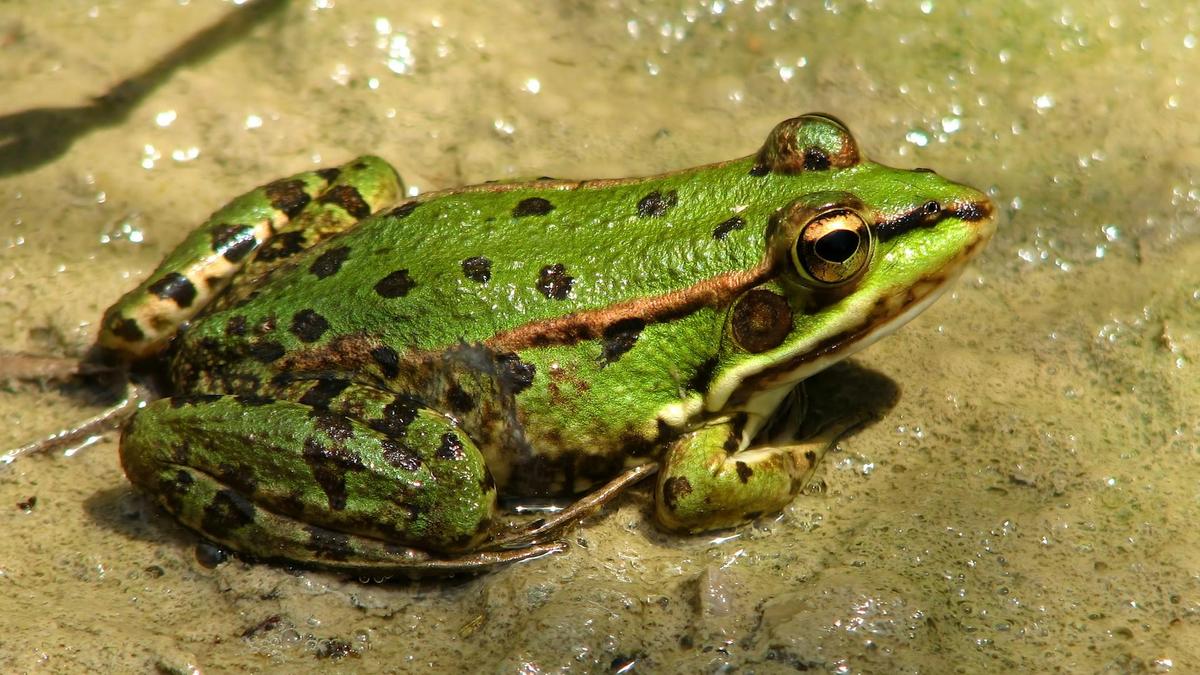
An international team of biologists has identified the cause of a mass die-off of amphibians in Brazil's forests around the early 1980s: the pathogenic fungus Batrachochytrium dendrobatidis was responsible for the species losses, infohub.kz reports.
Researchers from the Smithsonian Conservation Biology Institute and Pennsylvania State University have solved a half-century-old mystery surrounding the sudden disappearance of frogs in Brazil's Atlantic Forest. Their findings, published in the journal "Molecular Ecology," confirmed that an outbreak of chytridiomycosis caused the ecological disaster. The dangerous infectious disease is caused by the microscopic fungus Batrachochytrium dendrobatidis, which damages amphibians' skin and disrupts their breathing. Previously, the animals' deaths were often blamed on climate change or local weather anomalies.
To test their hypothesis, the scientists turned to the archives of the National Museum of Natural History in Washington. The authors tested more than 370 alcohol-preserved specimens of 17 amphibian species collected at the Boracéia biological station by herpetologist William Ronald Heyer between the 1970s and 1980s. No traces of infection were found in specimens collected before 1979. However, among the amphibians caught after the crisis began in the 1980s, more than half were infected. The biologists explained that the most sensitive species died immediately, so only organisms with high resistance survived.
During follow-up field expeditions in 2022–2024, the scientists found 12 of the 17 historical species. This proved that the surviving populations were able to gradually adapt to the pathogen and recover their numbers.