

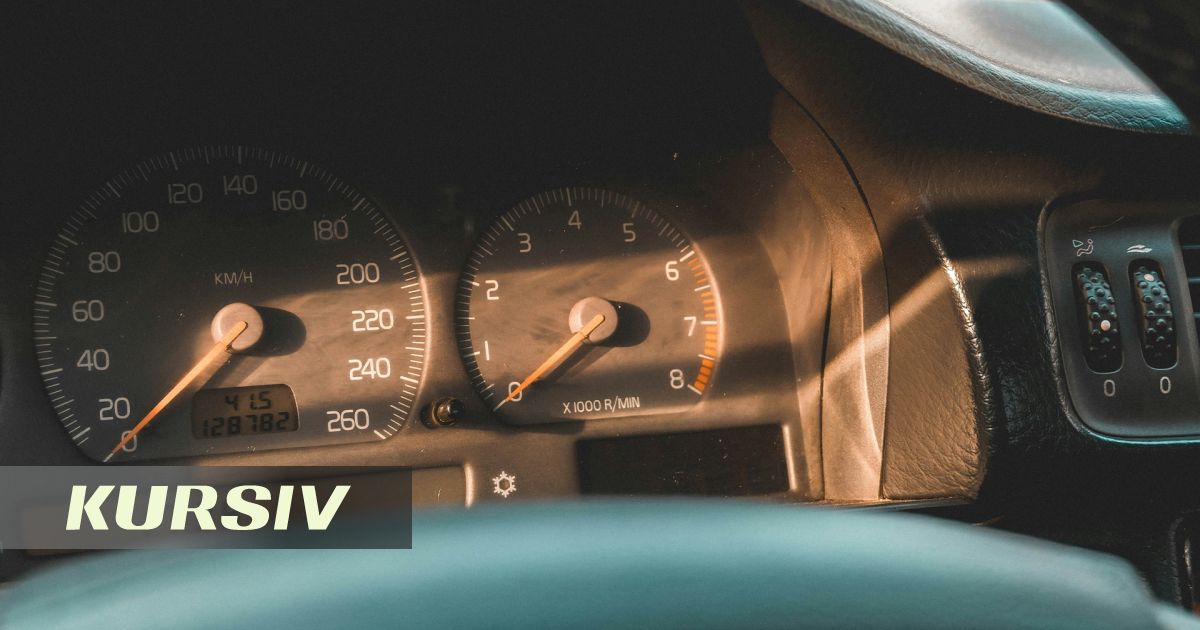
Reaching 100,000 km on the odometer doesn't mean it's time to sell your car. It's more a reason to take a closer look at the timing belt or chain, the transmission, the braking system and the suspension — and to budget for maintenance in advance, according to infohub.kz.
The timing belt is one of the main items to check. On most cars, the timing belt is designed to last roughly 60,000–90,000 km. Skip the replacement and the risk of a snapped belt and serious engine damage rises. A timing chain usually lasts longer, but it too can stretch. One sign of trouble is a metallic sound on a cold start.
After 100,000 km, it's worth checking the condition of the automatic transmission and its oil-change history. For many automatic transmissions, an interval of around 60,000–70,000 km is considered a practical guideline, even if the manufacturer calls the fluid lifetime-fill.
Brakes deserve no less attention. Pads are best replaced when the friction lining is down to about 3–4 mm, and brake fluid should be changed every 2–3 years regardless of mileage. Disc thickness must meet the manufacturer's minimum specification.
After that kind of mileage, stabilizer links, bushings, control arms and other suspension components often need checking. A knock over bumps is a reason to get a diagnosis, not to wait for the next scheduled service. A faulty suspension can speed up wear on tires and steering components.
Car repair and maintenance costs in Kazakhstan are steadily rising. The report notes that in the first half of 2026 they rose 13.5% year on year. The cost of work depends on the model, the brand and the level of service. For example, replacing brake pads at a service station can cost from 3,500 tenge. Replacing a timing belt or chain with a set of parts will run about 60,000–80,000 tenge. Repairing or replacing an automatic transmission can cost far more.
The auto-service market itself has also grown. Kursiv Auto previously reported that in the first four months of 2026, maintenance and repair stations provided services worth almost 104 billion tenge.
Paperwork for work performed is especially important when selling a car. A vehicle with a confirmed service history and 120,000 km on the clock may inspire more confidence in a buyer than a car with lower mileage but no information about previous maintenance.
After 100,000 km, it's also not worth skimping on key consumables and parts: a cheap replacement can lead to a repeat repair or faster wear on neighboring components.
Kursiv Auto previously reported on what to do if a car loses power and starts burning more fuel.