

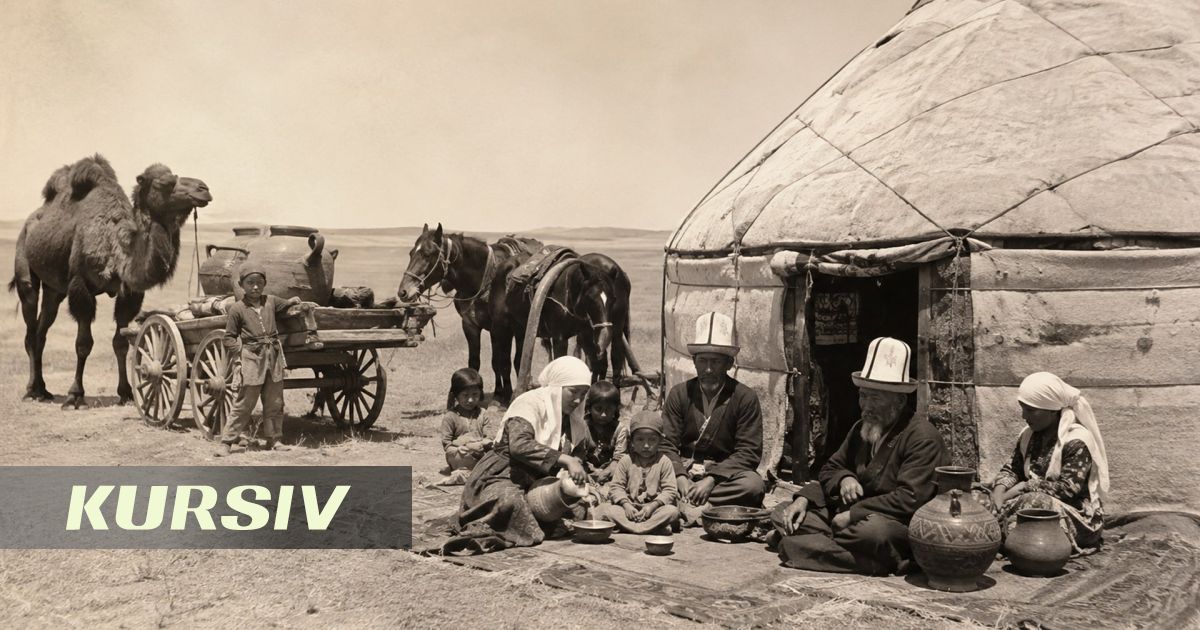
In the face of extreme summer heat, traditional methods of staying cool might seem surprising: hot green tea instead of ice water, a thick quilted robe instead of a tank top, and a felt yurt instead of a lightweight tent. These time-tested solutions helped the people of the steppes and cities of Central Asia endure extreme temperatures long before air conditioning, reports infohub.kz.
Kazakh culture and steppe civilization combined two worlds: nomadic and sedentary. Each of these ways of life developed its own unique mechanisms for adapting to the climate.
For the nomadic population, the problem of scorching heat was partly solved by the system of seasonal migrations. Summer pastures were located in cooler northern areas or in the highlands. But even the daily life of the steppe dwellers was fully adapted to the heat.
The design of the yurt ensured continuous air circulation. Through the open shanyrak, hot air rose and escaped. In extreme heat, the felt side panels were lifted or completely removed, leaving only the lattice and a reed mat that was easily ventilated by the wind. Meanwhile, the felt roof effectively blocked direct solar heat. According to researchers, the temperature inside a yurt was 5-10 degrees Celsius lower than outside.
Contrary to modern assumptions, the best protection from the sun was a loose quilted robe. Like felt, the layers of fabric created an insulating air layer and prevented the body from overheating. Going out into the steppe without a head covering was considered unacceptable.
During the hot season, the diet shifted towards fermented milk products: koumiss, ayran, shubat, and milk kozhe. Meat was rarely consumed in summer. Drinks and water were stored in leather wineskins and clay vessels, which kept them cool.
Sedentary architecture and urban planning in Central Asia also fully obeyed the laws of thermodynamics and climatic conditions. Houses were built of mud brick with walls 60 centimeters to a meter thick. Such walls heated up slowly, keeping indoor temperatures 8-12 degrees lower than outside. Narrow city streets provided constant shade, preventing the sun from heating the ground.
Life in a city house revolved around a closed courtyard with trees, vine-covered canopies, and a hauz—a small pool. The region also made extensive use of kyarizes (underground channels bringing cold mountain water over tens of kilometers), sardobas (domed reservoirs for water storage), and badgirs (wind towers for ventilation).
City dwellers, like nomads, avoided cold water in the heat, preferring hot green tea. All labor-intensive tasks were shifted to early morning or evening. This is also linked to the preserved custom of morning plov. Men gathered for a communal meal before dawn, then went to work before the midday heat.
Earlier, Kursiv reported that the abnormally hot summer of 2026 led to an increase in emergency medical calls across the country. Due to high temperatures, people of all ages are increasingly experiencing hypertensive attacks.