

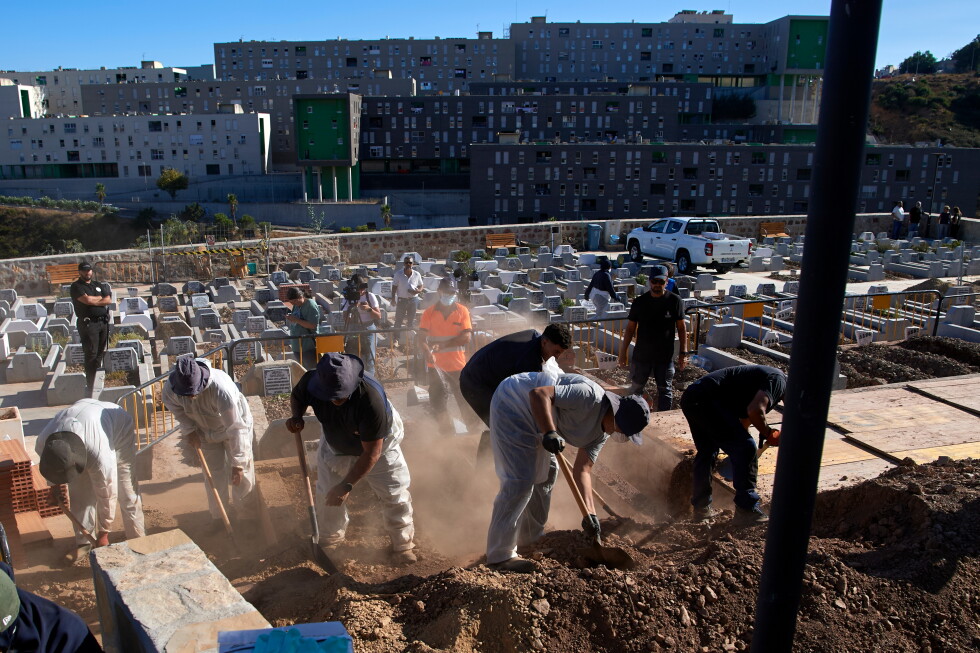
Spain's North African enclave of Ceuta has begun burying migrants who died during a border crisis three weeks ago. This was reported by infohub.kz.
On Friday, 18 migrants were laid to rest at a Muslim cemetery in Ceuta. As an Islamic cleric read prayers and chants praising God, funeral workers lowered white body bags and covered them with soil. The first four victims were placed in cinderblock graves, while a small group of locals watched. The graves were marked only with numbers, as the identities of the deceased have not yet been determined.
These individuals were among the more than 90 migrants who lost their lives during Spain's deadliest border crisis. Fueled by misinformation, poverty, and lack of opportunities, over 72,000 people poured into Ceuta, a Spanish territory neighboring Morocco. Many of the dead drowned or were killed in a stampede to cross a breakwater barrier near a border checkpoint.
The Moroccan Association for Human Rights, a left-leaning NGO, called for the burials in Ceuta to be halted until every effort was made to identify the bodies and repatriate them to Morocco, the country of origin for most of the migrants. In a statement, the organization asked Morocco's foreign ministry to ensure that the bodies are returned to the families so they can be buried with dignity. It called the burials a "new human tragedy."
A spokesperson for Ceuta's city government said last week that the paperwork to repatriate the bodies was complete, but Morocco's government had not accepted it. Morocco's foreign ministry did not respond to questions about the burials.
While most of those who crossed into Ceuta in late July returned to Morocco almost immediately, local authorities say that up to 10,000 migrants could still be in the small Spanish city, prolonging a humanitarian crisis as authorities and locals struggle to shelter and attend to them. Spain's national government cites a lower figure of around 5,000 people.
Moroccan and Spanish authorities have blamed social media rumors and human smuggling networks for the deadly event, while migrants cited unemployment and low wages as reasons for making the journey.
All of those buried on Friday were men, said Said Mohammed, the cemetery's acting manager. The graves were marked with numbered stones in case families claim the bodies in the future. Under Islamic custom, a body is placed in a grave facing Mecca, as was the case with the migrants buried in Ceuta. Just across the sea lay mainland Europe — their desired destination.