

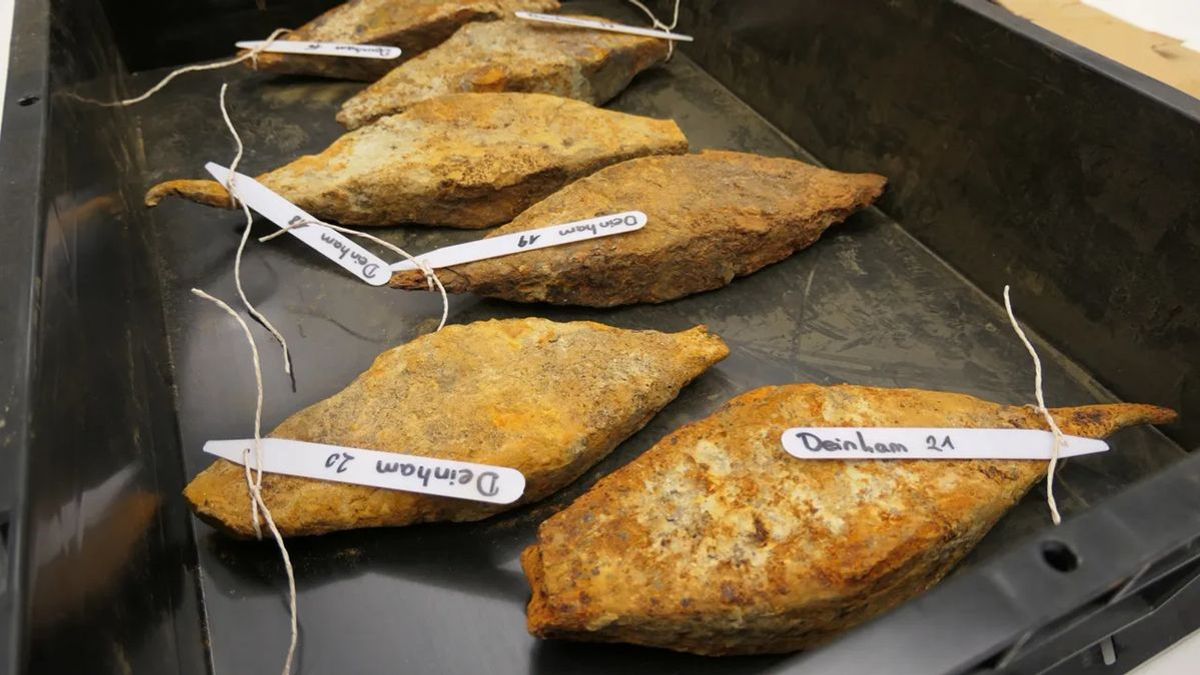
Archaeologists at the University of Innsbruck have completed their analysis of a unique "rusty treasure" that was accidentally discovered during gravel extraction in the Danube near the municipality of Dainham in Upper Austria, the website infohub.kz reports.
More than a tonne of ancient metal was recovered from the river, consisting of 193 intact blanks and hundreds of fragments. Researchers describe the find as the largest mass collection of prehistoric iron bars in Europe.
The artifacts belong to the La Tène culture of the late Iron Age and date to the 3rd–2nd centuries BC. Each intact bar has a spindle shape with pointed ends, a length of about 28.5 centimetres and a weight of up to 2.4 kilograms. Experts estimate that the volume of raw material found could once have been forged into around 500 swords to arm an entire army, or turned into as many as 8,000 metal nails for building fortifications.
Peter Trebsche, who led the research, noted that the blanks were being transported on a barge and ended up on the riverbed as a result of a shipwreck. The metal was heading downstream along the Danube, and the bars themselves were most likely made in Bavaria. The scientists stress that a consignment of this scale points to a high level of development in metallurgy and foreign trade in the region.
The find has been handed over to the museum "Oberösterreichische Landes-Kultur". Archaeologists are now carrying out a chemical analysis of trace elements to determine with high precision the mines where the ore for these blanks was extracted.