

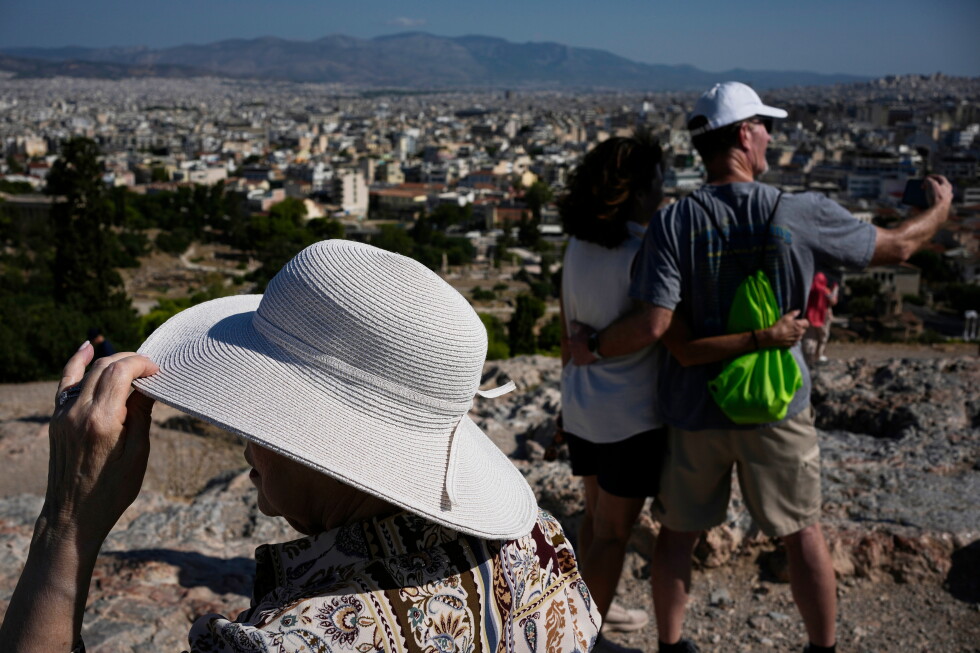
At tourist sites in Athens, the capital of Greece, a wide variety of sun hats can be seen. Outside the Acropolis, people wearing straw boaters, Panama hats, baseball caps, and other headgear are climbing toward the ancient site. In the city center, kiosks and shops have outdoor racks full of hats, as tourists seek protection from the midday heat.
Last year, the Acropolis drew about 4.6 million visitors, a record year for Greek tourism. Many visitors spend hours in temperatures exceeding 30 degrees Celsius, with little shade. Even a carriage horse near the ancient monument wears a brown hat with holes cut for its ears.
“You need a hat. I’m already red as it is,” said Jack Yosif, an Australian tourist. He says it has become more common and people are more aware of the sun’s harm.
Despite a record 38 million tourists visiting Greece last year, the scorching heat has not deterred them. The combination of hot weather and high demand for sites—meaning not everyone can visit in the morning—makes sun protection essential. Greek health campaigners welcome the growing awareness of the dangers of ultraviolet rays. Red Cross volunteers at the Acropolis hand out kits with sunscreen, water, information leaflets, and red caps.
Konstantinos Mallios, a kiosk owner on nearby Syntagma Square, says hat sales have risen in recent years. His stylish and souvenir hats cost up to 20 euros, while the cheapest costs 6 euros. Elsewhere, disposable hats made from compressed paper pulp are also sold.
There are more ostentatious options. In her basement workshop, hatmaker Lisa Sarigiannidou turns straw braids into hats using century-old presses and molds in a matter of minutes. Her hats start at 50 euros, with elaborate designs costing more than 100 euros.
“People’s attitudes toward hats have changed,” said Sarigiannidou, who was trained by her father. “In the past, a young woman would try on a hat and laugh at herself in the mirror. Now they try them on seriously and wear them straight out the door.”