

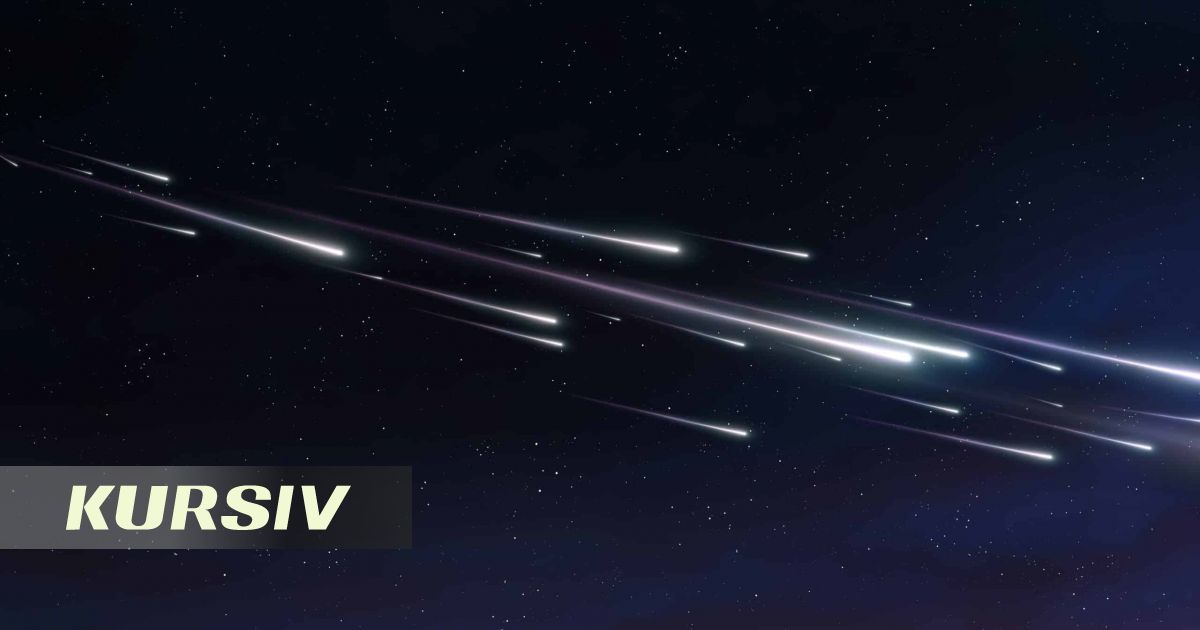
In October 2026, stargazers will be able to watch two major meteor showers — the Draconids and the Orionids — along with several weaker displays, according to infohub.kz.
Main meteor showers of October
1. The Draconids (October 6–10). Peak activity: the night of October 8–9. Rate: 5 to 15 meteors per hour. The shower, however, is known for unpredictable outbursts that can sharply boost its intensity.
Viewing conditions: Ideal.
The peak coincides with a new moon, so the sky will be as dark as possible and the thin crescent will not wash out even the faintest meteors.
Where to look: The radiant lies in the constellation Draco. Unlike most other showers, the Draconids are best seen right after nightfall and in the first half of the night. Its meteors have a reddish tint and move relatively slowly.
And the second shower: the Orionids (October 2 – November 7). Peak activity: the night of October 21–22 (the greatest concentration comes after midnight and closer to 4 a.m.).
Rate: about 15–20 meteors per hour.
Viewing conditions: Unfavorable. A bright moon at roughly 80% will create strong skyglow. Astronomers advise waiting until the second half of the night, when the moon begins to set below the horizon and the shower's radiant climbs higher.
Where to look: The meteors stream from a radiant in the constellation Orion. The Orionids are produced by the famous Halley's Comet. They are very fast (entering the atmosphere at 66 km/s) and often leave glowing trails behind them (tails of ionized gas).
Minor meteor showers
If you are planning long nights of observing, you may spot meteors from weaker showers during the month:
The October Camelopardalids — peak October 5–6 (up to 5 meteors per hour, radiant in the constellation Camelopardalis).
The Delta Aurigids — peak October 11.
The Southern Taurids — peak October 13 (slow but very bright meteors).
The Epsilon Geminids — peak October 18.
The Leonis Minorids — peak October 24.
Tips for successful viewing:
Get out of the city: Urban lighting hides up to 90% of meteors. Stargazing is best 30–50 km away from large population centers.
Let your eyes adjust: It takes about 15–20 minutes for your eyes to adapt to full darkness. During that time, try not to look at smartphone screens.
Earlier, Kursiv wrote about the September meteor showers.