

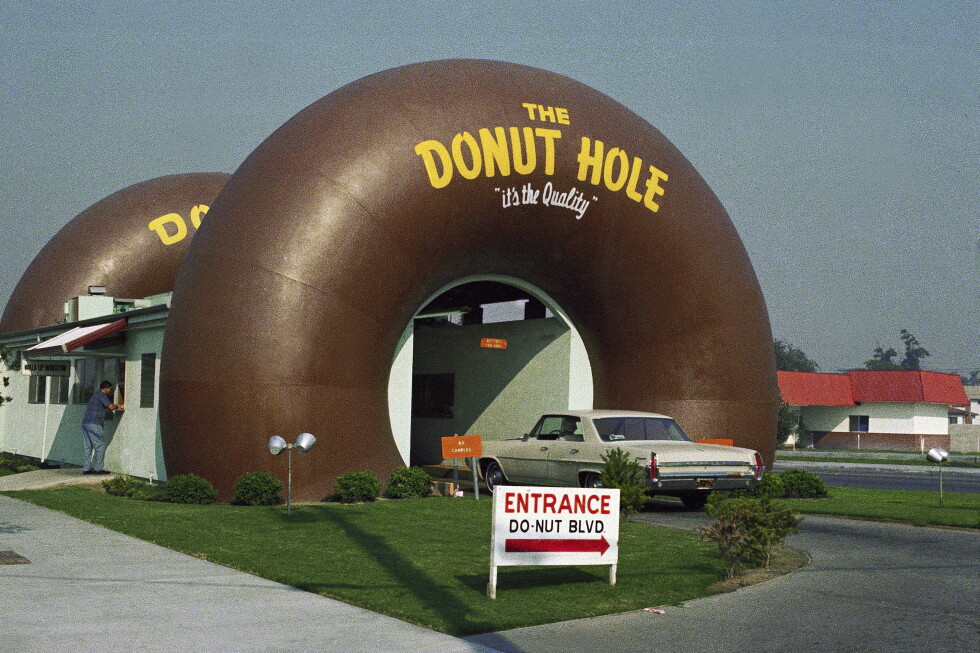
The history of the intersection of America's fast food system and car culture runs deep. The combination of these two phenomena began in the early 20th century with the advent of drive-in restaurants. At that time, customers sat in their cars while servers (ideally on roller skates) brought out food that could be eaten from trays hung on the window. This scene evokes classic episodes from "Happy Days."
However, the real innovation emerged in the late 1940s. According to sources, the idea was implemented either by In-N-Out Burger in California in 1948 or by Red's Giant Hamburg in Springfield, Missouri in 1947. For comparison, the first drive-thru in Europe did not open until 1985 in Dublin.
By the mid-1960s, this format had become widespread in the United States, spawning many imitators and innovators. Jack in the Box pioneered the drive-thru exclusive restaurant with no indoor seating and no parking, featuring a mechanical clown to take orders. In Western states, residents of a certain age will recall the Wienerschnitzel chain with its distinctive A-frame buildings specially built with a tunnel down the middle for cars.
This innovation led to unexpected knock-on developments. Restaurant menus shifted heavily toward sandwiches, fries, chicken strips, and other portables that could be consumed on the go. Cars themselves adapted over the years to accommodate larger and larger drink holders. The sociological and nutritional impact on consumers would be the subject of a much longer essay.
The innovation hasn't stopped. Modern drive-thrus have evolved into tightly coordinated multi-lane affairs. At Chick-fil-A restaurants, dedicated staff with tablets stand (breathing in exhaust fumes all day) to ensure a seamless ordering process without mechanical speaker garbles.
The drive-thru, with its distinctly American creative spelling, has become woven into the fabric of the culture. It has been enshrined in the Smithsonian Museum of American History and has played a memorable role in recent and successful Presidential campaigns.
As one historian put it: "The drive-in was less a pure novelty than an expression of great American passions that go hand in hand: speed, efficiency and, sometimes, laziness."
This article is part of a recurring series, "American Objects," marking the 250th anniversary of the United States.