

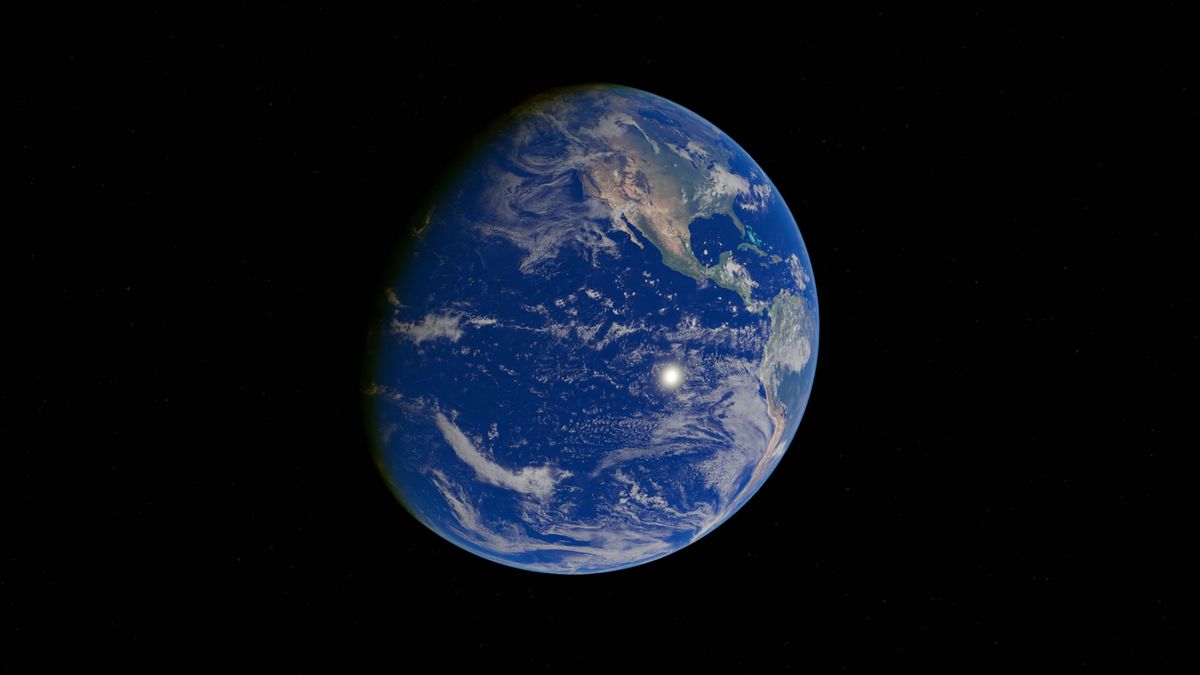
The planet's metallic core has served as a source of hydrogen for its outer layers for billions of years, altering the composition of volcanic rocks, researchers say. Their findings were reported by Gizmodo, according to infohub.kz.
Roughly 4.5 billion years ago, the young Earth was a molten ball. As it cooled, heavy iron sank toward the center, forming a metallic core, while lighter rock rose to form the mantle. For a long time it was believed that the layers remained isolated from one another afterward, but new computer simulations indicate that chemical exchange between them continues to this day.
The authors modeled the crystallization of the ancient magma ocean and compared the results with samples of volcanic rock from Baffin Island in the Canadian Arctic and from Iceland. These lava deposits were found to contain an incredibly low concentration of deuterium, a heavy isotope of hydrogen. Such a ratio cannot be explained by simple cooling of magma, but it is easily explained by leakage of ordinary light hydrogen, part of water, from the core itself.
As iron sank toward the planet's center, it carried light hydrogen with it. Over billions of years, this element gradually seeped back into the mantle, rising to the surface along with rare isotopes of helium, tungsten and ruthenium. The scientists now plan to determine the exact mechanism by which substances from the core travel these vast distances and reach the surface.