

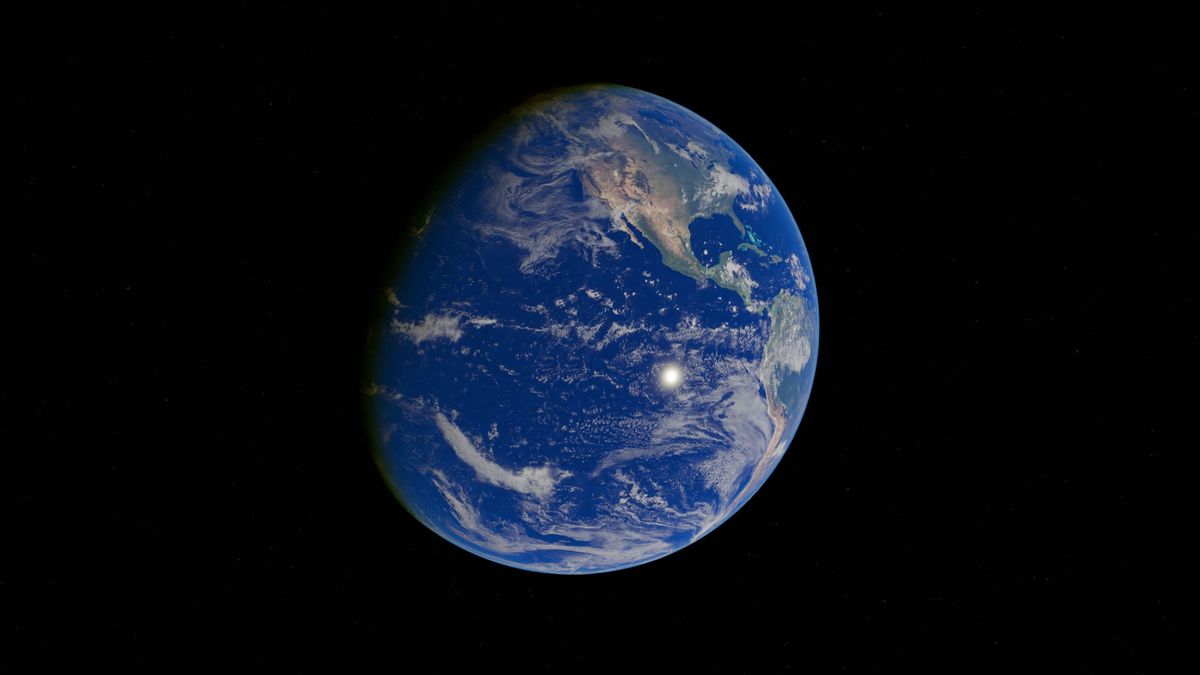
The solid surface of the Earth has begun to contract at the equator and flatten at the poles due to the rapid melting of polar ice sheets, the website infohub.kz reports.
Our planet is naturally shaped like an oblate spheroid, slightly bulging at the equator. However, Christopher Kotsakis, a professor of geodesy at Aristotle University of Thessaloniki, has found that melting glaciers are altering this relief. The researcher analyzed data from the Global Navigation Satellite System and discovered that the Earth's solid surface is gradually becoming rounder.
The main cause of this process is the redistribution of mass across the planet's surface. The loss of ice at the poles reduces pressure on the Earth's crust, causing those areas to rise. According to the scientist's data, from 2011 to 2015 the rate of uplift at the poles ranged from 0.5 to 1 millimeter per year, while compression in the equatorial region occurred at similar rates. Meltwater flows toward the equator and, conversely, exerts additional pressure on the land.
Although the changes seem insignificant for a planet nearly 12,800 kilometers in diameter, their pace is increasing with every decade. Scientists stress that the process concerns the solid surface specifically: when the oceans are taken into account, the mass of water at the equator continues to grow. The process itself does not threaten human life, but it clearly demonstrates the scale of the impact of climate shifts on the planet's physical properties.