

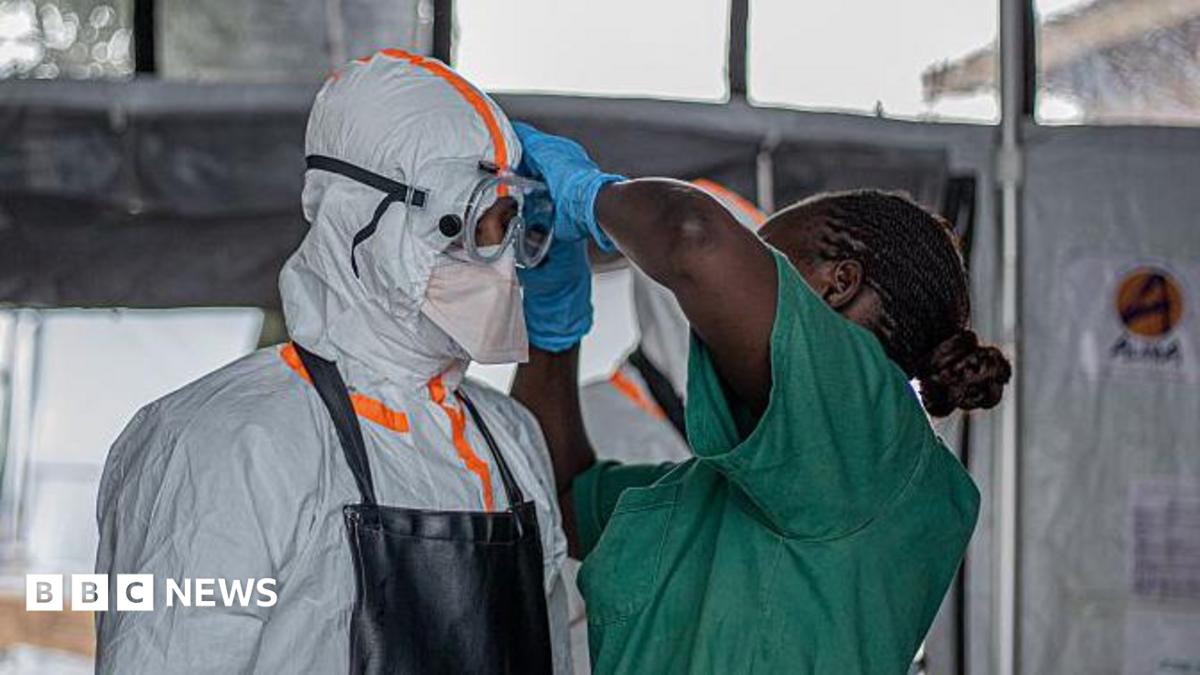
The World Health Organization (WHO) has warned that the latest Ebola outbreak in the Democratic Republic of Congo (DRC) began at least three months before it was officially declared, meaning health authorities are still playing catch-up. This indicates that the spread of the disease is still not under control, as reported by infohub.kz.
Since the official declaration on 15 May, the virus has killed more than 1,900 people, making it the second-largest Ebola outbreak in history. Infection rates remain high, showing that authorities are struggling to contain the spread.
The epicenter of the outbreak is in the east of the DRC, involving the Bundibugyo species of Ebola. Instability in the region has hampered control efforts. Additionally, there is no approved vaccine or effective treatment for the Bundibugyo species, making it even harder to manage.
Dr. Mohamed Janabi, WHO Regional Director for Africa, said at a press conference in Bunia, the city at the heart of the outbreak: "We are chasing the virus, the virus is ahead of us." He cited research showing that the virus began spreading in February and was initially misdiagnosed as malaria or typhoid.
Janabi also noted that due to insecurity, health workers can only reach about 30% of cases, with the rest dying at home. Traditional burial practices, where mourners touch the deceased's body, and distrust of health authorities in some communities have also complicated the situation.
However, several dedicated treatment centers have been opened in eastern DRC, and patients are being diagnosed more quickly. According to the DRC Ministry of Health, there have been 4,294 confirmed cases and 1,960 deaths so far. The largest Ebola outbreak occurred in West Africa between 2014 and 2016, killing 11,325 people.