

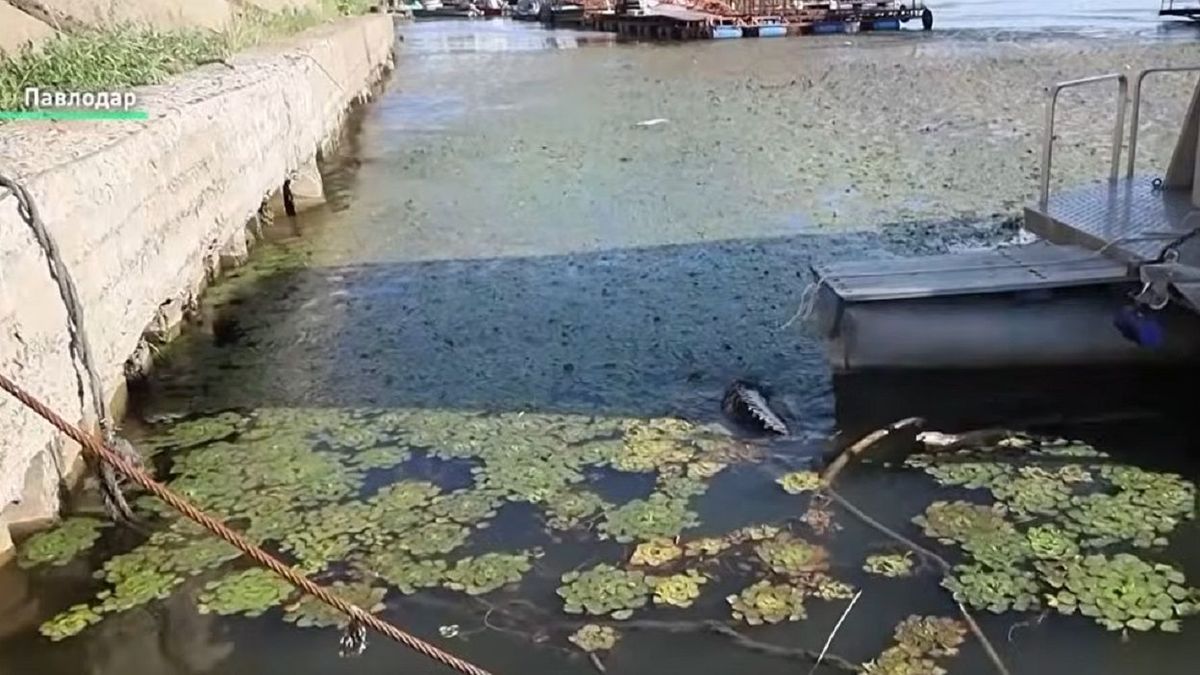
In East Kazakhstan, ecologists warn that the rapid overgrowth of the Irtysh River by a Red Book plant could lead to serious ecological problems, reports infohub.kz.
According to Almaty.tv, every summer the same picture is observed on various sections of the Irtysh: the water surface becomes overgrown with dense thickets. Specialists are particularly concerned about the floating water chestnut, also known as Trapa natans or chilim. The warm spring weather has contributed to the rapid spread of the plant in shallow waters.
"This year the summer was very warm, the spring was warm, and April and May were warm, so the water warmed up well to the very bottom. The fruits of the water chestnut can lie on the bottom and, under certain storage conditions, remain viable for up to 50 years. At present, there is a general trend and a common problem: the shallowing of rivers. That is, rivers are becoming shallower, and water bodies are shrinking," said expert biologist Tatyana Ponomareva.
But the problem is not only the chilim itself. After the season ends, all the green mass will sink to the bottom, increasing the amount of organic sediment and creating favorable conditions for the growth of other aquatic plants. This could accelerate the swamping of certain river sections. However, specialists believe there is no harm in this.
"According to the results of a commission survey, the observed development of aquatic vegetation in this section of the Irtysh River is seasonal and due to natural factors: high air and water temperatures and weak currents in the Zaton area. The commission concluded that this situation poses no threat to the population," said the press service of the Department of Subsoil Use, Environment and Water Resources of Pavlodar Region.
However, public activists disagree. They are confident that if a solution is not found now, the consequences could affect not only the Irtysh ecosystem. According to them, due to siltation, the river will gradually become shallower, and dense thickets will become a favorable breeding ground for insects.
"On these green branches and grasses, mosquito nests will gather. Mosquitoes will breed right here. The water will then recede: it will rise, then recede. And mosquitoes, mosquito eggs, will spread a thousand, a thousand times. And people will suffer," noted Yuri Pavlenko, a member of the ecological council.
But removing the overgrown chilim is not so easy. Under Kazakhstan's Environmental Code, the water chestnut is listed in the Red Book, and damaging even one such plant incurs a fine of 13 million tenge. Therefore, biologists say the problem will have to be addressed at the level of the relevant ministry. Specialists intend to push for changes that would preserve the balance between protecting the rare species and safeguarding the Irtysh ecosystem.