

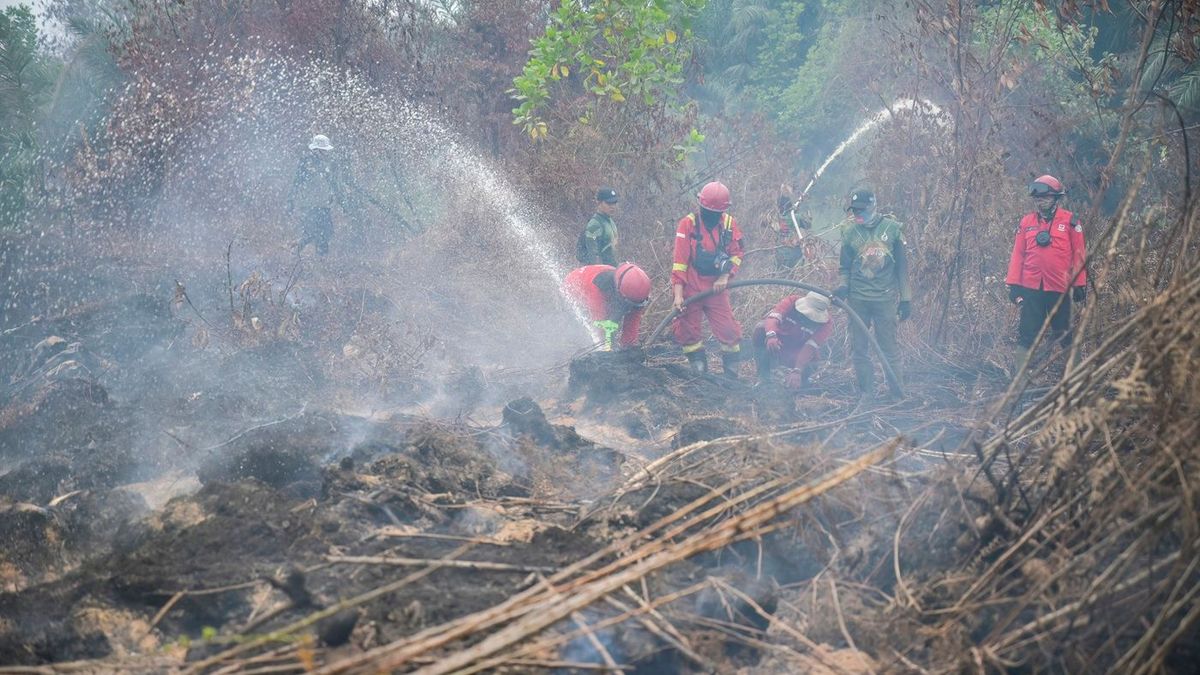
The intensifying El Niño climate phenomenon and severe drought have sparked massive underground peat fires in Indonesia, reports infohub.kz.
Indonesia's 2026 wildfire season is rapidly expanding, raising fears of a repeat of the catastrophic crisis of 2015. According to NASA Earth Observatory, severe drought and a strengthening El Niño have dried out about 36% of the world's tropical peatlands, which are located in the country. As a result, the fire has penetrated deep underground, where peat can smolder for months at relatively low temperatures.
Experts note that underground peat fires are far more dangerous than ordinary forest fires. According to scientists' estimates, they emit three times more fine particulate matter and organic carbon, five times more sulfur dioxide, and twice as much methane and carbon monoxide. As Robert Field, a researcher at Columbia University, stated, fire activity in the first weeks of the season shows a sharp increase. By early September, the fires had already released about 10% of the greenhouse gases recorded during the entire three-month period of the 2015 disaster.
Monitoring is complicated by the fact that thick smoke obscures the view of the MODIS and VIIRS satellites, hiding hotspots under tree canopies and within the soil. Mark Cochrane, an ecologist at the University of Maryland's Center for Environmental Science, explains that the drainage of peat swamps for rice paddies and palm plantations in the 1990s made the region extremely vulnerable. Local residents are already facing flight delays, closure of national parks, and schools switching to distance learning due to hazardous smog.