

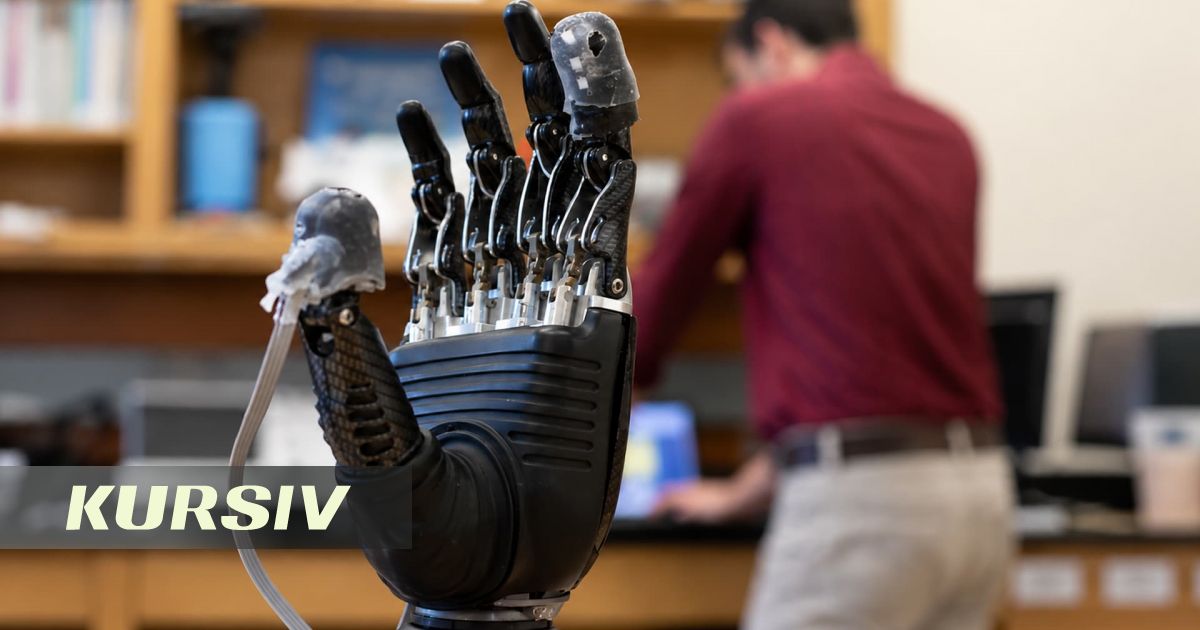
American bioengineers have developed an innovative coating for prosthetics that can restore the sense of touch. The new system recognizes pressure, texture, hardness, and temperature of objects the prosthetic comes into contact with, reports infohub.kz.
Existing electronic coatings for prosthetics are often expensive, uncomfortable, and poorly adapted to the shape of the limb. Moreover, their sensitivity can decrease when manufactured for a specific prosthetic, and processing large amounts of data in real time poses a challenge.
The new development solves these problems with a "scan-model-print" technology. Specialists first scan the prosthetic, then create an individual sensor shell that tightly and evenly covers the surface, conforming to the shape of the limb.
The sensors are made as thin modules that connect without glue, similar to Lego bricks. This approach ensures durability, flexibility, and ease of production.
3D printing and laser cutting are used to make the "electronic skin." According to the developers, this reduces the cost of the technology and potentially makes it accessible to more patients.
Earlier, it was reported that scientists from the Netherlands developed a tiny screw-shaped robot capable of making its own way through brain tissue.