

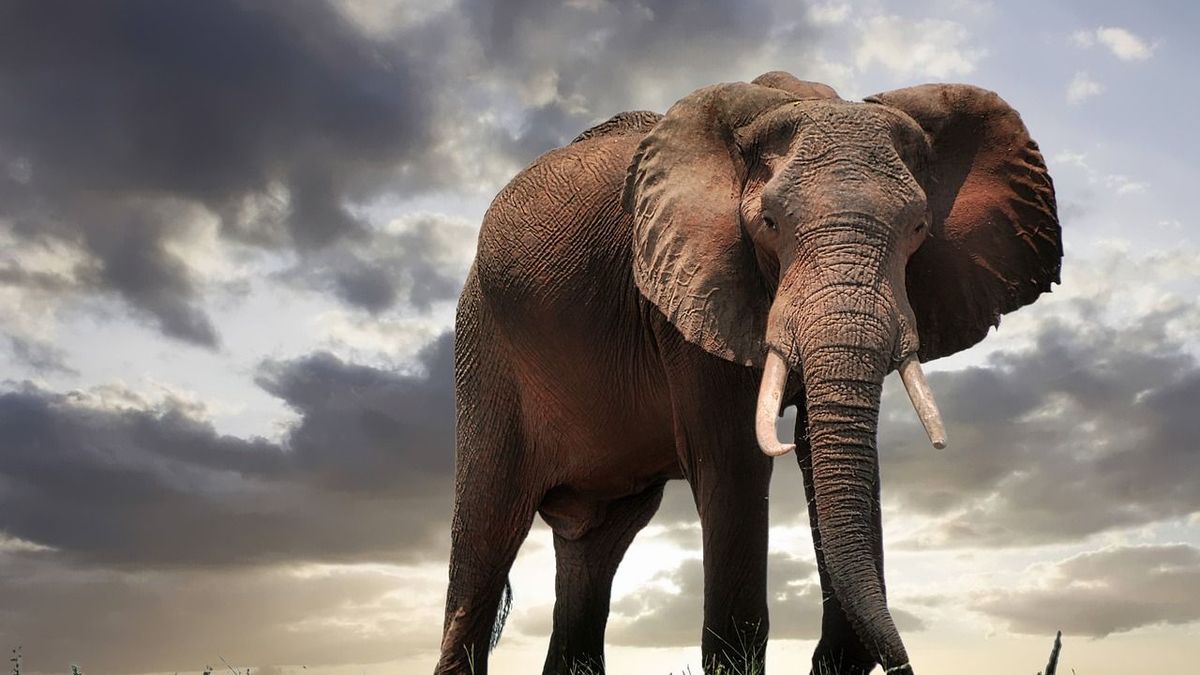
The area of land in southern Africa where elephant raids on farmland are most likely will grow by 33–100 percent by 2085. Human activity and drought are being cited as the cause, infohub.kz reports.
According to SciTechDaily, more than 290,000 savanna elephants live in southern Africa — about 70 percent of the continent's entire population. Researcher Evan Patrick and colleagues analyzed data on animal attacks on fields in Namibia from 2004 to 2020. The scientists then used machine-learning algorithms to assess risks in northern Botswana, as well as in parts of Angola and Zambia.
The main cause of the worsening problem was identified as the expansion of farmland and settlements into the elephants' natural habitat. Resource shortages in reserves caused by drought are also forcing the animals to venture out to fields in search of food. During the rainy season, the number of such incidents was ten times higher than in the dry months. Among the most vulnerable areas, the researchers singled out land north of Namibia's Etosha National Park and the area around the Okavango Delta in Botswana.
Mathematical modeling showed an inevitable rise in the number of encounters under all development forecasts through 2085. The most pessimistic scenario would double the frequency of raids during the rainy season compared with an environmentally sustainable path. The authors stressed that aggressive human development of wild land will be the decisive factor in the crisis, while climate change will play a less noticeable role.