

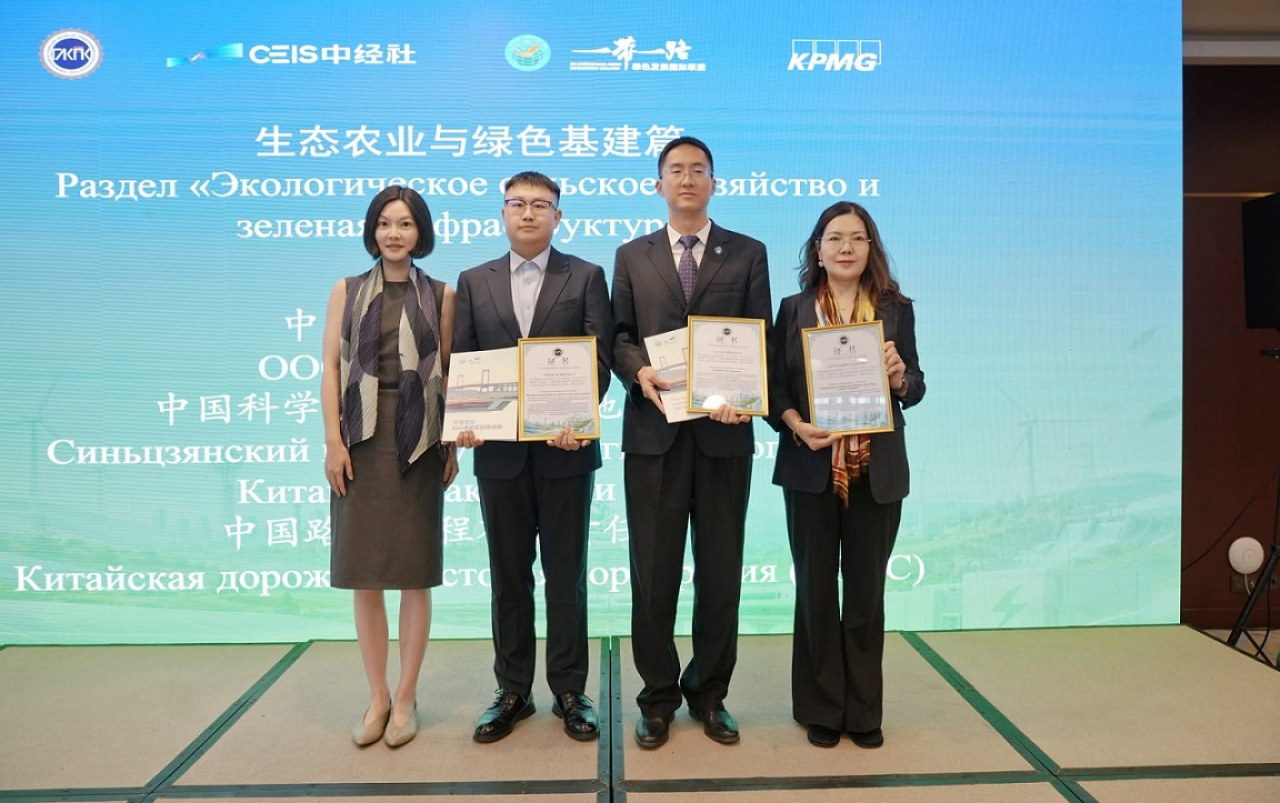
On July 15, Astana hosted the presentation of the "Compendium of Best ESG (Environmental, Social, and Governance) Practices by Central Asian Enterprises" and a thematic seminar on green transformation and sustainable development, reports infohub.kz.
Representatives from government agencies of China and Central Asian countries, international organizations, major corporations, trade and industry associations, and think tanks gathered to share ESG experiences and discuss building a new cooperation ecosystem between China and Central Asia based on sustainable development principles.
Su Yu, Counselor-Envoy of the Chinese Embassy in Kazakhstan, noted that over 10,000 enterprises with Chinese capital are registered in the country. These companies operate within the legal framework, comply with requirements, and actively fulfill social obligations. According to him, the practices showcased in the compendium demonstrate that ESG has become a common development concept deepening cooperation between China and Kazakhstan.
Yerlan Yerkeblanovich, Deputy Chairman of the Board of the International Center for Green Technologies and Investment Projects under the Ministry of Ecology and Natural Resources of the Republic of Kazakhstan, stated that the publication will contribute to spreading successful experiences and foster cooperation between government agencies, businesses, academia, and international organizations.
Ji Lei, Vice President of the China Economic Information Service under Xinhua News Agency, reported that since March this year, about 60 applications have been received from five Central Asian countries, covering energy, agriculture, infrastructure, finance, and other industries. The organizers hope the compendium will serve as a bridge between policymakers, the real sector, and the scientific community, deepening cooperation in sustainable development.
Kemelbek Baktygulovich, Chairman of the Board of Khabar Agency JSC, emphasized that Kazakhstan and China are eternal comprehensive strategic partners. Interaction between the leading media of the two countries is an important component of this cooperation. Exchanging experiences, joint projects, and objective coverage of sustainable development initiatives strengthen mutual trust and understanding between the peoples.
Zafar Khakimovich Makhmudov, Head of the Project Implementation Group at the State Committee on Investments and State Property Management of Tajikistan, on behalf of the expert commission, spoke about the case selection procedure and officially announced the publication of the compendium.
The compendium includes 13 real-world examples of sustainable development principles implemented by Central Asian enterprises, replicable in other countries and industries. Among them: a gas field development project on the right bank of the Amu Darya that created a "territory of happiness" for residents of Turkmen villages; the work of Chinese agricultural scientists who cultivated cotton fields on desert lands near the Aral Sea; and the construction of a modern park-type waste incineration plant in ancient Samarkand.
The compendium also includes comprehensive solutions in green finance that account for climate and environmental risks; a system of public participation and social impact assessment in Tugan-Karagan; and an online educational platform that allowed hundreds of thousands of Kazakh students to study artificial intelligence.
Large-scale transformations in green development and social responsibility are underway in Central Asia. An increasing number of companies involved in the region's development are simultaneously implementing environmental protection projects and measures, participating in education and healthcare development, and improving quality of life.
Chinese clean technologies and digital management experience are providing significant support for Central Asia's green transformation. New institutional mechanisms are emerging aimed at improving worker well-being and expanding public participation.
Merym Kozhokmatova, Vice President of the Chamber of Commerce and Industry of the Kyrgyz Republic, noted: "The unique value of the compendium presented today is that it gathers real and successful examples of ESG practices in Central Asia. These are not theoretical discussions but practical experience that can become the foundation for new cross-border cooperation initiatives and long-term regional interaction."
Zhang Jianyu, Deputy Secretary General and Director of Development of the Belt and Road International Green Development Coalition, and Asel Nurakhmetova, Head of the Carbon Platform of the Astana International Financial Centre, presented expert opinions on "How ESG Can Move from Brand Value Enhancement to a Sustainable and Profitable Business Model."
The event was co-organized by the China Economic Information Service of Xinhua News Agency and the Belt and Road International Green Development Coalition. Organizational support was provided by the General Association of Chinese Entrepreneurs in Kazakhstan, with assistance from KPMG Kazakhstan.
Also attending were Aziz Abdullaevich Nasirov, Advisor at the Embassy of Uzbekistan in Kazakhstan; Yuliya Yakupbayeva, Chair of the Sustainable Development and ESG Council under the Atameken National Chamber of Entrepreneurs; representatives of CNPC for Central Asia and Russia; and dozens of other enterprises actively operating in the region.