

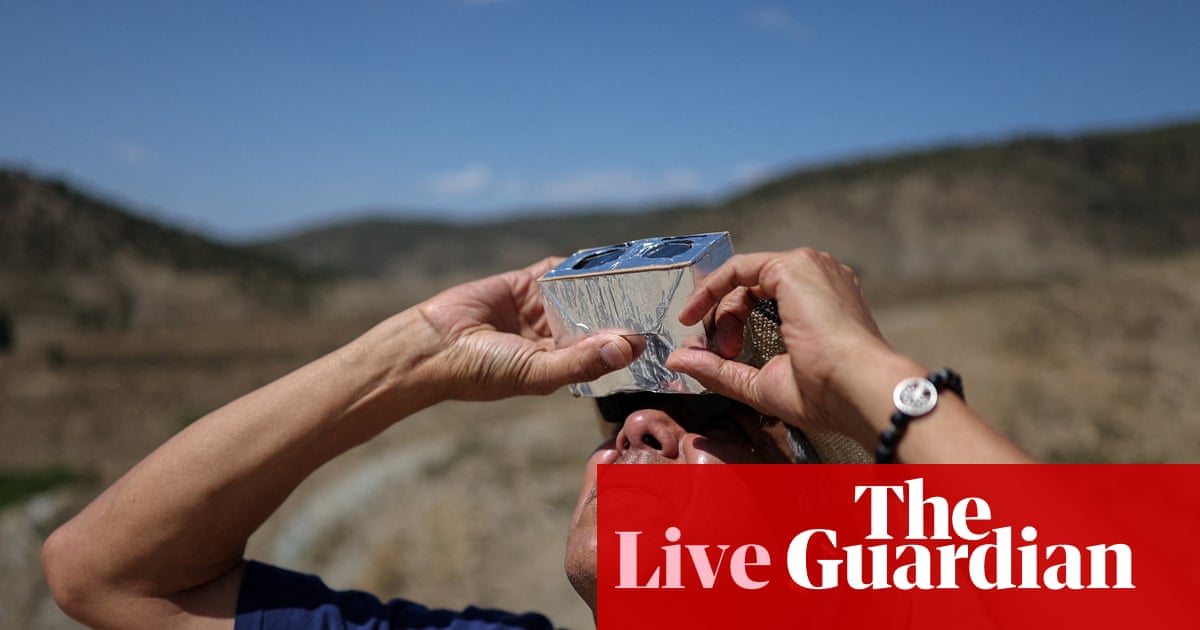
Today, on August 12, 2026, a rare total solar eclipse occurred in western Europe, with the sun's light virtually blocked out across many regions of Spain, the UK, France, Belgium, Switzerland, and northern Italy. This is the first total eclipse in mainland Europe in two decades, reports infohub.kz.
The path of totality covered a wide band of northern and central Spain, a sliver of Portugal, and parts of Greenland and Iceland. The last such event visible from the UK was in 1999, when parts of Devon and Cornwall were in the path. The next total solar eclipse visible in the UK is not expected until 2090.
In Spain, excitement was palpable. "It's going to be spectacular," said César González, an astronomer and science communicator at the Madrid Planetarium. "A total solar eclipse is one of the best spectacles in nature." Officials estimated that up to 6 million people could flock to the eclipse path on Wednesday, which stretches about 200 km from A Coruña in Spain's northwest to the Mediterranean island of Mallorca. A small strip of Portugal and parts of Greenland and Iceland also experienced the rare total eclipse.
Tens of millions more watched across western Europe, including the UK, France, Belgium, Switzerland, and northern Italy. Online forums buzzed as people debated potential cloud cover and shared tips on the best viewing points. In many parts of Spain, this was the first total solar eclipse in more than a century, so interest was especially high.
Some cities organized special events and distributed eclipse glasses for safe viewing. For example, in Madrid, glasses were handed out during a municipal information day. A shop in Falmouth posted a sign advising that no stock of solar eclipse glasses remained.
Frenchman Leyssalle Anthony, 39, prepared a telescope on a beach in Arija, Spain, to view the total eclipse. Meanwhile, people from across Europe flocked to prime viewing spots to witness this rare natural phenomenon.