

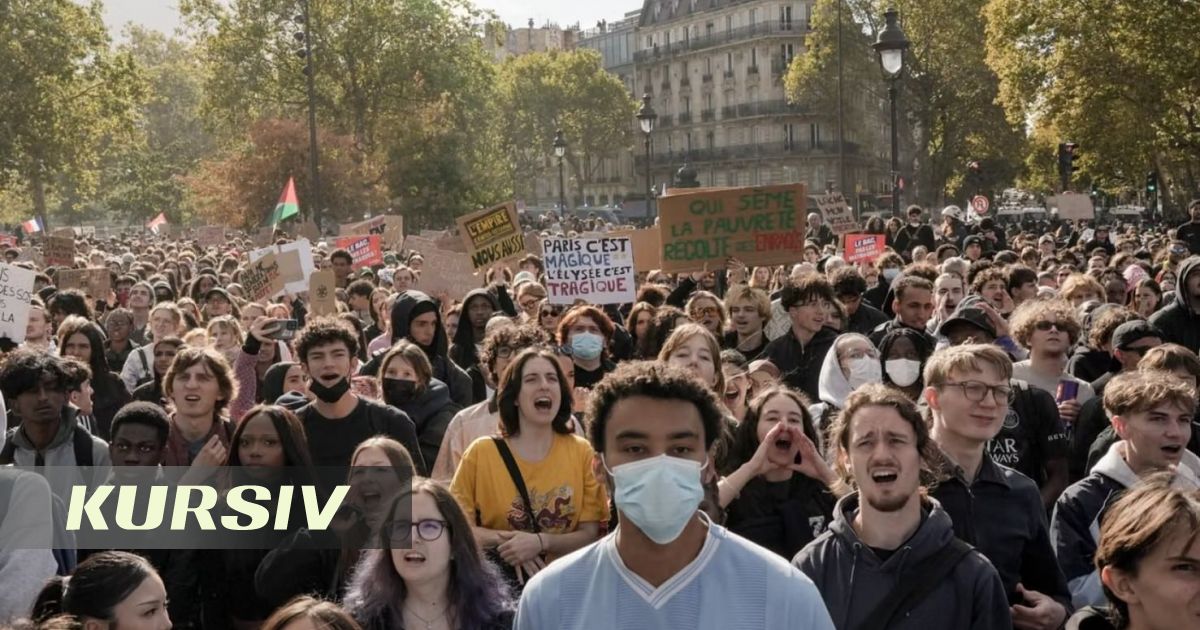
For a third straight week, protests by French school students angry over teacher shortages and poor learning conditions have continued. On October 8, participants again blocked schools and staged demonstrations that, according to the Interior Ministry, drew 71,500 people, infohub.kz reports.
The largest rally took place in Paris, with 24,500 participants. Place de la Bastille was the focal point of the demonstration. The protest remained peaceful for most of the day, but in the evening small groups of demonstrators clashed with police.
Unrest was also reported in other cities. According to the French Interior Ministry, arsonists attacked a police station in Bordeaux, a school was looted in Saint-Étienne, and a demonstrator beat a teacher in Toulouse. In Marseille, a teacher at the Lycée Victor Hugo also reported an assault and filed a complaint with police.
The actions of French security forces have drawn accusations of excessive force amid severe injuries to school protesters. In Tours, a 16-year-old lost vision in one eye; according to the prosecutor's office, the injuries are consistent with being struck by a projectile from a police LBD launcher. In Lens, a 15-year-old student had a hand amputated after a police grenade exploded. The circumstances of both cases are under investigation. After the incident in Lens, the French Interior Ministry suspended the use of stun grenades during school protests.
The protests have continued for a third week. Participants complain of teacher shortages, overcrowded classrooms, and dilapidated buildings. They say classrooms are cold in winter and hot in summer.
Teacher Diana Di Sciullo joined the demonstration in Marseille. She said her class has 37 students and lacks furniture for lessons.
"At the start of every lesson, I have to ask them to check neighboring classrooms for free chairs and desks so they can study properly," Di Sciullo said.
Her sign read: "I am a teacher, and my students help me catch cockroaches during lessons."
Education Minister Édouard Geffray said additional teachers will be brought in to address the staffing problem. Schools with high workloads also plan to revise their schedules. According to Reuters, classes for teenagers in France can run from eight in the morning until six in the evening.
The minister also said work is underway to improve the national university admissions portal Parcoursup, which has been criticized for being complicated and stressful for applicants.
Prime Minister Sébastien Lecornu promised to present "concrete, rapid, and fully funded response measures" by the end of October. However, protest leaders deemed these promises insufficient and called for new marches on October 13. Calls to protest on October 17 are also circulating online.
Another source of discontent has been police actions in breaking up demonstrations. Since the protests began, hundreds have been detained and dozens injured.
On October 7, the French government suspended the use of stun grenades during school protests. The decision came after a teenager lost a hand when a grenade exploded.
According to an Elabe poll for BFM TV, 72% of French people consider the protesters' demands justified. At the same time, 55% support ending the protests.
Similar actions took place in neighboring Belgium—in Brussels, Seneffe, and Liège.