

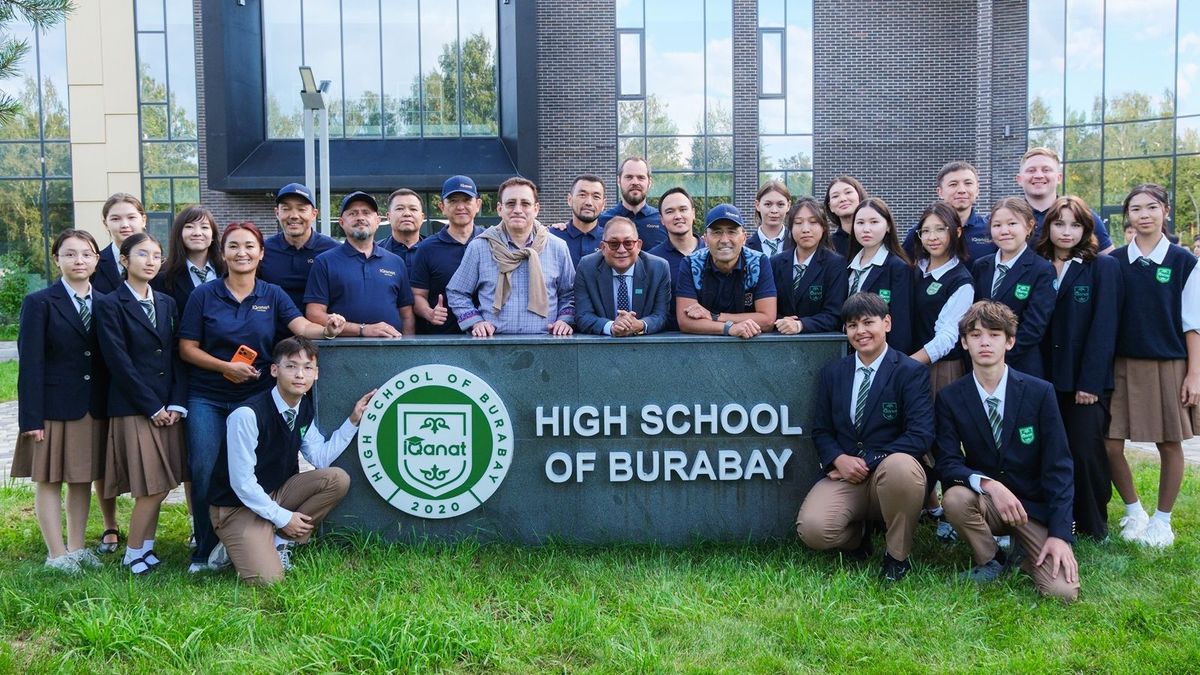
For the first time in history, an educational project from Central Asia has become a business case at Harvard Business School. The focus of the study is IQanat. Details were shared by project representatives... reports the website infohub.kz.
"When one of the best business schools in the world - Harvard Business School - includes a project in its educational case base, it means that it is not just an inspiring story, but a working model that is important for students and researchers from different countries to study. IQanat has become the focus of such analysis, and it is especially important for us that the experience created here, in Kazakhstan, is of interest far beyond the country's borders," emphasized Azamat Ashamaev, Executive Director of IQanat.
The author of the case, Professor Boris Groysberg, recently flew from the USA to Kazakhstan. On August 20, he held an official presentation of the case at the IQanat school in Borovoye. Groysberg conducted a session with students, alumni, teachers, trustees, and the foundation's team - those who are essentially the heroes of the case.
The study describes how IQanat identifies the academic potential of children from remote villages, helps them receive an education, and develops a unique financially sustainable model. The project's trusteeship system turns charity into long-term support rather than a one-time gesture. Currently, IQanat is supported by more than 260 philanthropists, and entrepreneurs have been involved in its development for over 8 years.
Tens of thousands of rural children go through the IQanat Olympiad every year; this year, more than 60,000. Among them are many children from socially vulnerable families, for whom access to quality education is limited. A key feature of the project is its rejection of the "winner takes all" principle: even those who do not receive a grant to study at the IQanat boarding school remain in the ecosystem through mentoring and educational support. Harvard is particularly interested in IQanat's ability to work for decades ahead and reproduce itself. One example is the Peer-to-Peer program: strong high school students from villages become tutors and teachers for younger schoolchildren from rural areas. Thus, a child who has received support begins to help the next generations, passing on the kindness. According to the foundation's program results, 94% of project graduates enter universities on grants and study in 19 countries worldwide.
Also attending the case presentation at the IQanat school was Rashed Mustafa Sarwar, UNICEF Representative in Kazakhstan. He noted that IQanat sets a high standard for the quality of children's education and human capital development, and the project's accumulated experience deserves to be adapted and cascaded in other countries.
Zukhra Shegenova, Academic Director of IQanat, notes: "For Harvard, IQanat is a rare example from Central Asia that is considered not only from the standpoint of social mission but also through the lens of social return on investment. This makes IQanat a model that can be applied by countries facing similar challenges - territorial inequality, staff shortages in rural areas, and limited access to quality education."
IQanat is a social and educational project by Kazakhstani entrepreneurs who want to change the life trajectory of rural children by giving them stronger starting opportunities through education and motivation.