

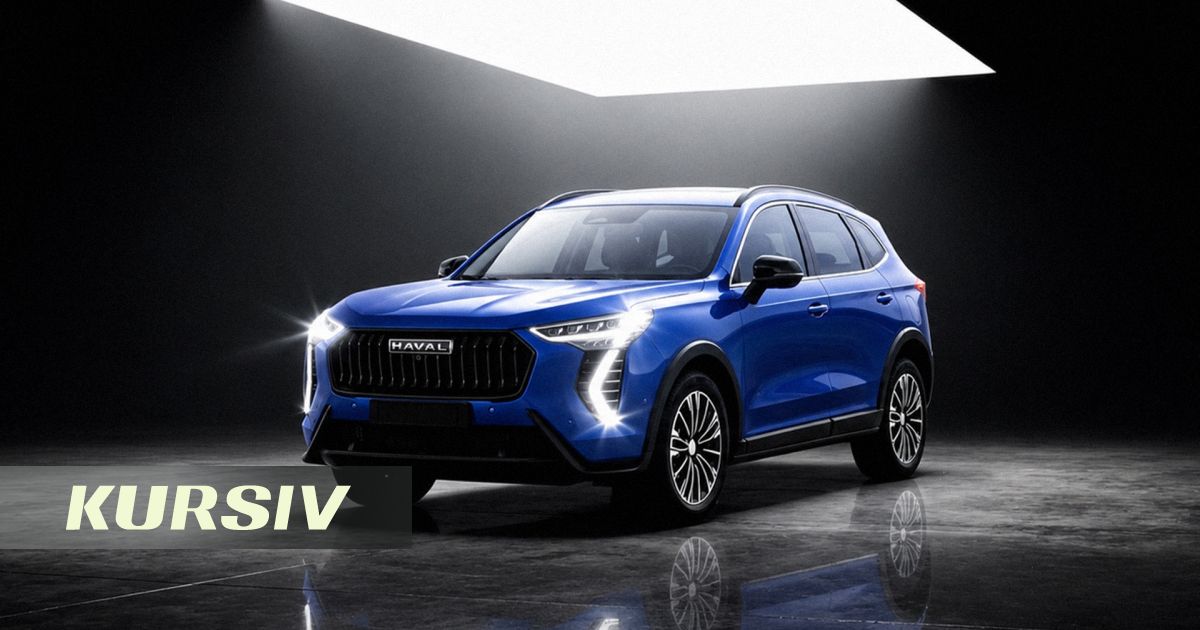
The Haval Jolion crossover has shown mixed results after a year of use: the owner was pleased with the spacious cabin, sound insulation, and rich features, but had concerns about the transmission, fuel consumption, and depreciation, reports infohub.kz.
The owner, who previously drove a Renault Sandero and a Nissan X-Trail, noted the Jolion's spacious cabin and quality sound insulation. The car feels most comfortable at speeds up to 110 km/h, and the rear row is quite suitable for a family with a child.
In daily use, the head-up display, surround-view cameras, adaptive cruise control, and multimedia system proved useful. The audio system's quality also exceeded the owner's expectations.
The owner cited the transmission as the main drawback. In standard modes, acceleration can be jerky and feel unpredictable. In sport mode, the car becomes noticeably smoother, in his opinion.
Fuel consumption in the city turned out to be considerable – up to 12.5 liters per 100 kilometers. For an all-wheel-drive version, this is not an extreme figure, but the Jolion cannot be called economical.
What is most disappointing is the resale value. After a year of use and 10,000 kilometers, the car has lost about 16% of its original value, according to the owner's estimate.
This is also important for Kazakhstan. Currently, the official Haval Jolion is offered at a promotional price from 7.9 million tenge, while the regular price according to the distributor's price list is 10.3–12.4 million tenge depending on the trim. Therefore, when buying, you should consider not only the price of a new car and its features, but also its future value.
The Haval Jolion may appeal to those who need a spacious family crossover with a good set of options. However, you will have to get used to the transmission, and it is better to consider the residual value before purchasing.
For Kazakhstan, the promotional price is currently an additional argument. If the crossover is purchased with an eye to resale, liquidity should be assessed on par with comfort, features, and fuel consumption.