

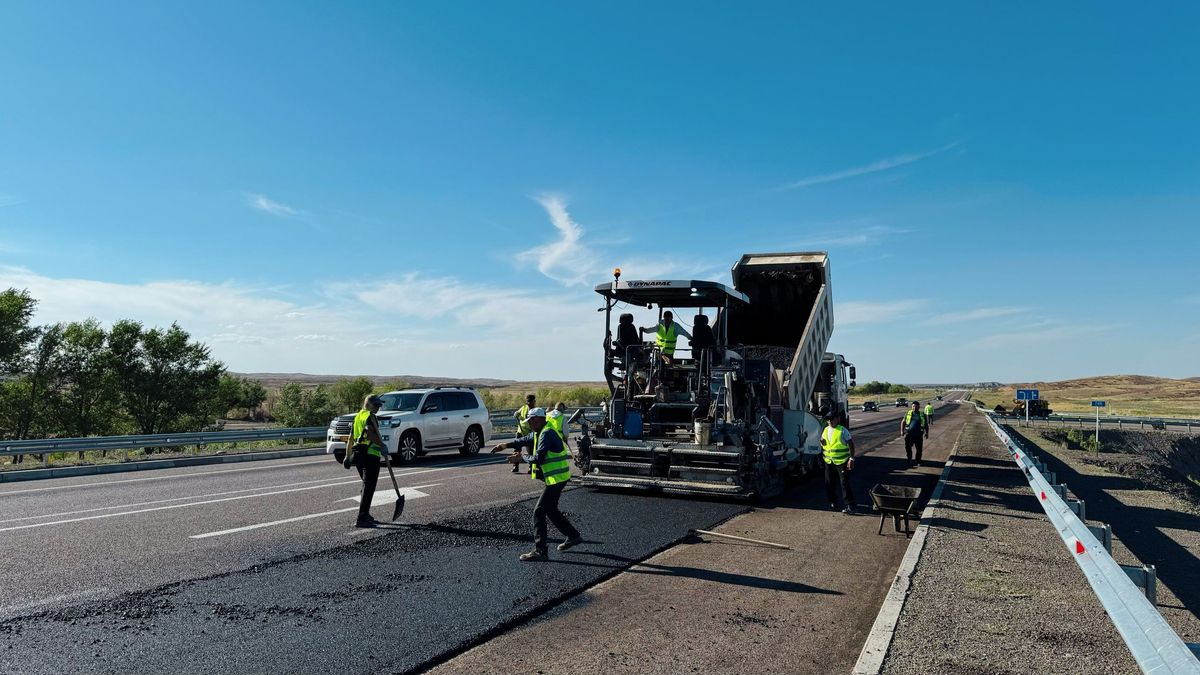
Heavy trucks are causing significant damage to a newly built highway in the Abai region, according to Kazakhstan's national road operator, KazAvtoZhol. The company has called on carriers to adhere to weight regulations, reports NUR.KZ.
In its official Telegram channel, KazAvtoZhol specified that the road in question is the republican highway Taldykorgan – Kalbatau – Oskemen, which is still under warranty. Specialists say the new road is already experiencing excessive strain due to regular heavy truck traffic. Since last year, monitoring has recorded intense movement of heavy vehicles transporting road construction materials for a major infrastructure project.
The consequences of this impact are already being addressed. This spring, under warranty obligations, 5,800 square meters of asphalt concrete pavement were restored. In August, another inspection of the section from the 720th to the 760th kilometer revealed the need to repair an additional 4,500 square meters of pavement. Work began on August 25, and by September 1, 2,600 square meters had been restored. Full repair of the identified defects is planned to be completed by September 5.
Thus, in a short period, restoration efforts have covered more than 10,000 square meters of new road surface. One of the key factors causing defects is the movement of heavy vehicles. Particularly destructive is the systematic exceeding of permissible axle loads, which leads to rutting, shifts, and other deformations, significantly reducing the road's service life, KazAvtoZhol emphasized.
To monitor the situation, automated weight and dimension measurement stations have been installed at the 691st and 783rd kilometers. The company also regularly raises the issue of weight compliance with relevant organizations and participants in the railway construction project.
The company has appealed to organizations transporting construction materials and truck owners to strictly adhere to weight and axle limits. Overloading allows transporting more in a single trip, but its consequences remain on the road in the form of rutting, deformations, and premature repairs, carriers were warned.