

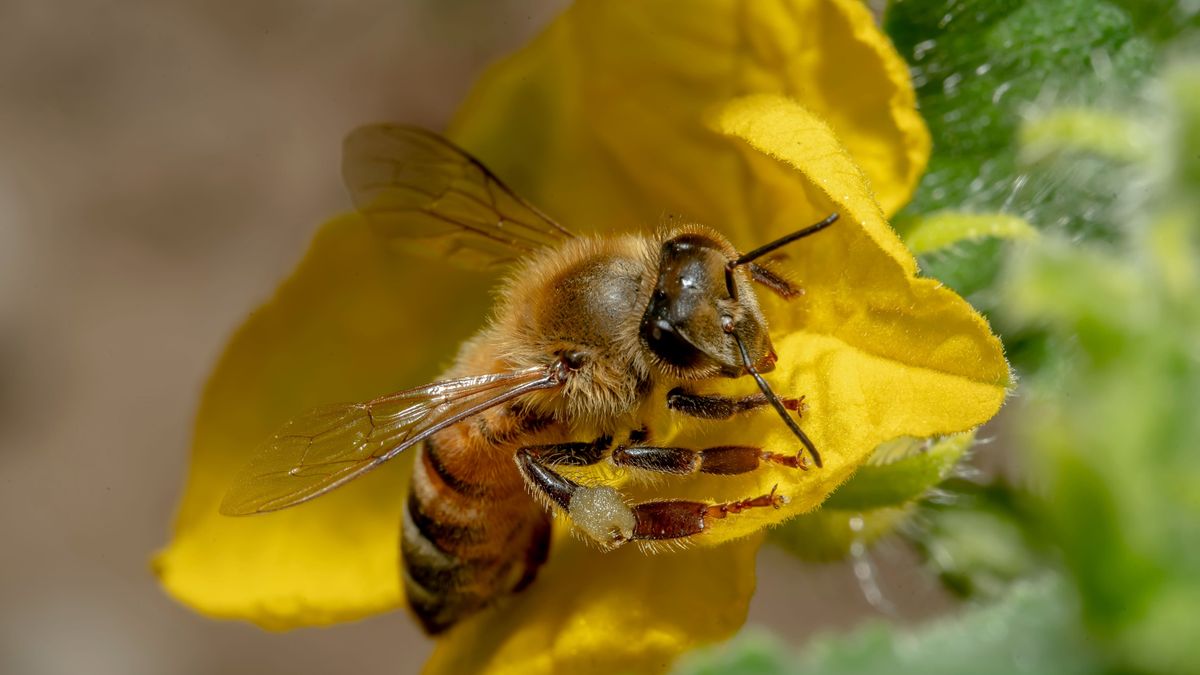
British researchers have documented for the first time how honeybees forcibly drive wild insects off flowers and take over food sources, infohub.kz reports.
Specialists from the University of East Anglia Ruskin conducted observations over two years near Cambridge. They tracked contacts between different pollinator species on flowering blackberry and ivy. It turned out that honeybees often were the first to show aggression, knocking bumblebees, solitary bees and hoverflies off flower heads or chasing them away. On blackberry, a twofold increase in honeybee numbers led to a 14 percent drop in bumblebee numbers.
In 20–36% of cases, the competitors preferred to fly away in advance without engaging in conflict. The only species able to stand up to honeybees turned out to be the ivy bee: it successfully defended its flowers and fought back against the aggressors.
The authors warn that climate warming could intensify this confrontation. At high temperatures, plants experience stress and produce less nectar, while honeybee activity only increases. The scientists stress that their goal is not to ban beekeeping but to help find ways to preserve wild pollinators.