

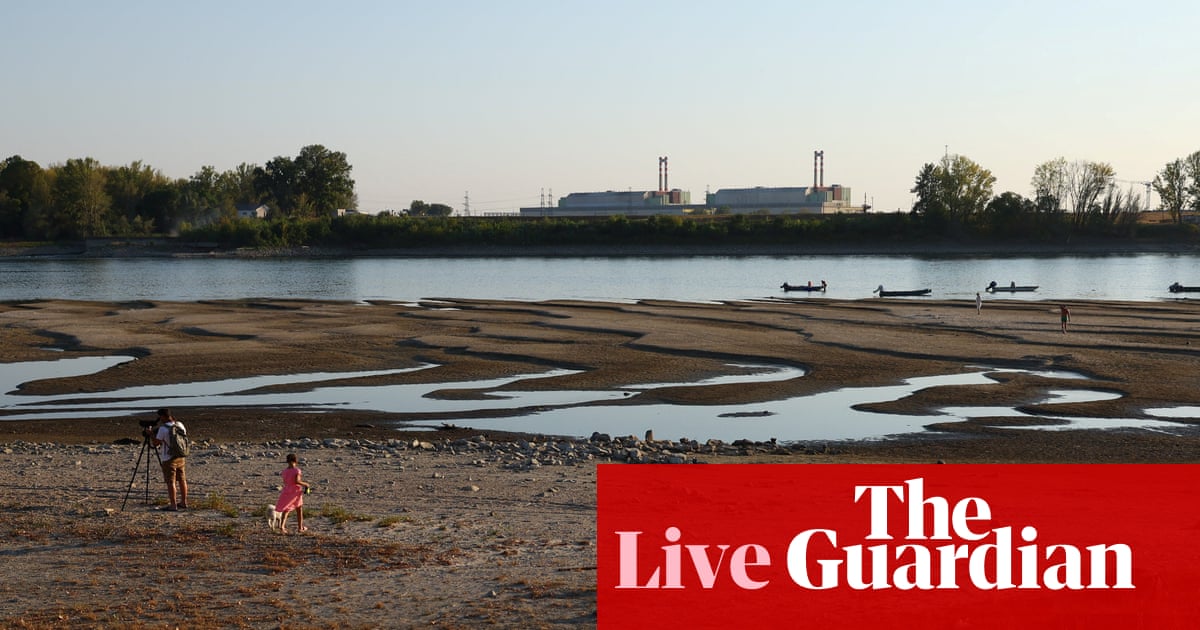
Hungary's prime minister, Péter Magyar, said the country's nuclear power plant came "within millimetres" of having to shut down overnight, as low water levels in the Danube continue to pose challenges for countries in south-eastern Europe. This was reported by infohub.kz.
"Around 1:30 a.m. we were a few millimetres away from completely shutting down the Paks Power Plant, but then the water level stopped falling and by morning it had risen 1.5 centimetres. The last turbine is currently operating safely," Magyar said on social media.
The plant already operates at a reduced capacity of just over 10% after the Danube fell to a record low, making it impossible to cool it properly. Energy minister István Kapitány said on Tuesday that a number of energy saving measures succeeded in lowering energy consumption to keep the grid secure.
A number of businesses have made significant adjustments to their normal ways of working to save energy consumption during the peak hours. For example, grocery chain Lidl changed its baking shifts, and turned off its drink fridges – despite temperatures expected to get close to 40C. Electric car chargers in their parkings can only be used until 5pm, HVG reported.
Over in Romania, the government celebrated a two-centimetre rise in water levels after yesterday's spectacular controlled explosion, intended to divert the flow of the Danube to help cool its Cernavodă nuclear plant. The plant manager told local media that it should help keep the plant running during the next few days, but more interventions are planned today, with plans to sink old barges to further divert the flow of water.
Temperatures are set to surpass 40C in large parts of Romania today, again. Meanwhile, in Brussels, EU interior ministers are meeting to discuss the migration crisis in Ceuta, the EU's relationship with Morocco, and steps to secure external borders.