

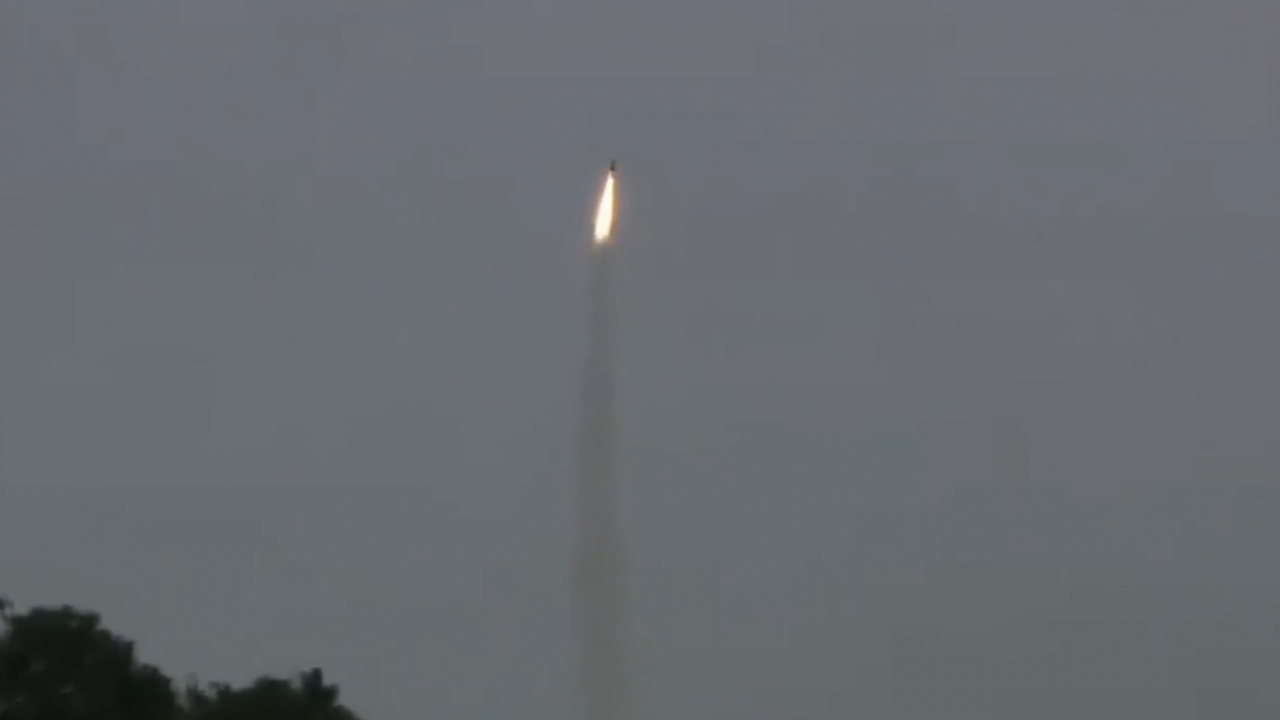
India has taken another significant step in developing its space industry: private company Skyroot Aerospace successfully launched its first own launch vehicle, the Vikram-1, confirming the country's ambitions to become a key player in the global commercial space launch market, according to infohub.kz.
The launch took place on July 18 from the Satish Dhawan Space Centre on Sriharikota Island in Andhra Pradesh. The approximately 22-meter rocket can deliver up to 350 kilograms of payload to low Earth orbit.
During its debut mission, Vikram-1 will carry several experimental payloads for Indian and foreign customers. These include a lab-grown diamond and robotic manipulators designed for space debris removal. The company noted that the main goal of the flight is to test the engine, navigation systems, telemetry and avionics, and collect data needed for future commercial launches.
Indian Prime Minister Narendra Modi called the launch a "defining moment" for the national space program. This is not the company's first success: in 2022, the Vikram-S rocket completed its first suborbital flight, marking a major milestone in the development of the country's private space industry.
Progress in this sector became possible after the 2020 reform, when India opened the space sector to private investment. Previously, rocket and satellite development was exclusively handled by the Indian Space Research Organisation (ISRO).
In recent years, India has significantly strengthened its position among leading space powers. In August 2023, the country became the fourth in the world — after the USSR, the US and China — to successfully land a spacecraft on the Moon. The Chandrayaan-3 mission, which landed near the Moon's south pole, attracted millions of viewers worldwide.
Now, authorities aim to turn the space sector into an economic driver. Under government plans, the Indian space industry's value is expected to grow to $44 billion by 2033, and the country's share of the global market is to increase from the current 2% to 10%.