

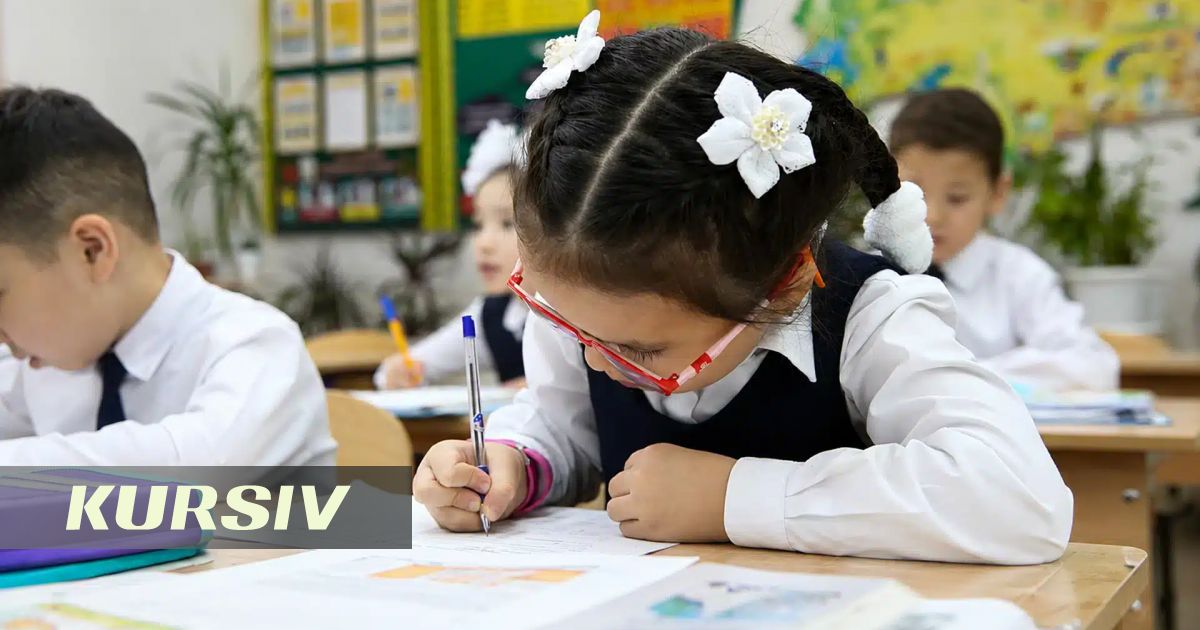
Kazakhstani school students have demonstrated a high level of proficiency in digital technologies and feel safe in educational institutions. These are the results of the international PISA-2025 study, released by the Organisation for Economic Co-operation and Development (OECD), reports infohub.kz.
According to the Ministry of Education, more than 22,000 fifteen-year-old students from 643 schools in Kazakhstan took part in the testing. One of the new sections of PISA was dedicated to assessing digital competencies. It turned out that 80% of Kazakhstani students are taught skills to verify and evaluate information generated by artificial intelligence. For comparison, the average across OECD countries is 63%. In addition, 85% of students attend schools where rules and guidelines for the use of digital devices are established.
Regarding the issue of bullying, 77% of Kazakhstani students said they do not encounter bullying. On average, only 53% of students in OECD countries say the same. The majority of respondents (71%) also believe that school helps them prepare for adult life, while the OECD average is 51%. Students also highly rated the support from teachers.
In the three main areas of PISA, Kazakhstani students scored an average of 420 points in science, 414 in mathematics, and 385 in reading. Results in science and reading remained at the level of the previous PISA-2022 study, with the science score higher than in 2018.
The study also identified problem areas. In particular, it is necessary to reduce the performance gap between regions and schools, strengthen students' basic knowledge, and improve the quality of teaching. Based on the analysis of PISA-2025 results, specialists will prepare recommendations for further improvement of the education system, the Ministry of Education noted.
Earlier, the head of the department, Zhuldyz Suleimenova, commented on parents' complaints about school bans on dyeing hair, wearing makeup, and doing manicures.