

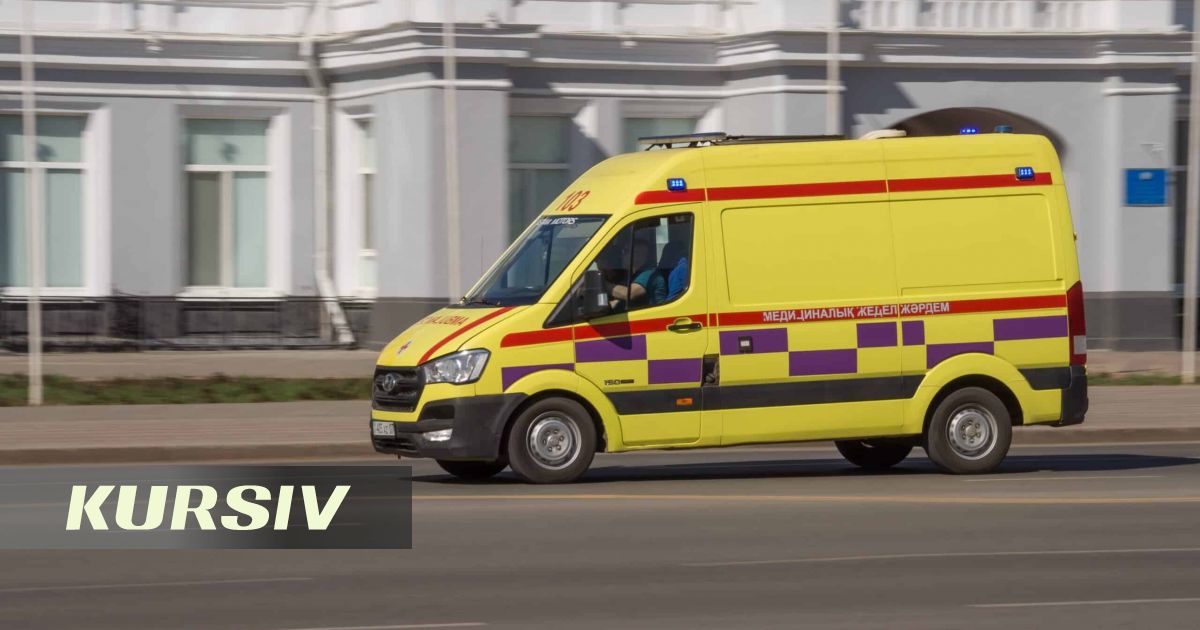
Changes to the rules for providing emergency medical care and medical aviation come into force in Kazakhstan on October 13. They provide for automatic notifications when a crew is dispatched, online tracking of its movement, and equipping medical workers with body cameras. However, the order does not specify the timelines for the actual launch of these functions in each region, the website infohub.kz reports.
Once a crew has been dispatched, the patient must be automatically notified of its departure and given the ability to track the vehicle's location and movement in real time through geoservices. An ambulance can be called by dialing 103, as well as through mobile applications, messengers and chatbots, including with geolocation sharing.
Calls concerning non-urgent conditions will be redirected to mobile teams of primary health care organizations — polyclinics. This refers to acute illnesses or exacerbations of chronic diseases without an immediate or potential threat to the patient's life and health. On weekdays, mobile teams work from 08:00 to 20:00. Registration of calls for redirection is provided from 08:00 to 19:00 on weekdays and from 08:00 to 12:00 on Saturday. Outside polyclinic working hours, such calls are handled by ambulance station crews. A mobile team provides care at the patient's actual location within its service area, regardless of where the patient is registered.
The rules set the following arrival times: first urgency category — up to 10 minutes, second category — up to 15 minutes, third category — up to 30 minutes, non-urgent conditions — up to 60 minutes. The time is counted from the moment the crew receives the call from the dispatcher. Before the medics arrive, the dispatcher must advise the caller by phone in a number of dangerous conditions. The list includes cardiac arrest, breathing disorders, loss of consciousness, bleeding, seizures, signs of acute coronary syndrome and stroke, as well as home births.
For the safety of employees, ambulance and polyclinic crews must be equipped with radios, wearable body cameras and mobile cameras. They are intended for audio and video recording of the situation on a call and during the transportation of the patient. If there is a threat to the life or health of medical workers, further handling of the call is carried out in the presence of law enforcement officers. A separate procedure has been defined for hospitalization of a sole parent or legal representative. If minor children are left unattended, they are handed over to law enforcement officers for subsequent placement in organizations for children left without parental care.
The rules provide that ambulance and primary health care crews handle calls without writing prescriptions or issuing sick leave certificates. They also do not conduct examinations for alcohol or drug intoxication, examinations to confirm death, and do not issue death certificates.