

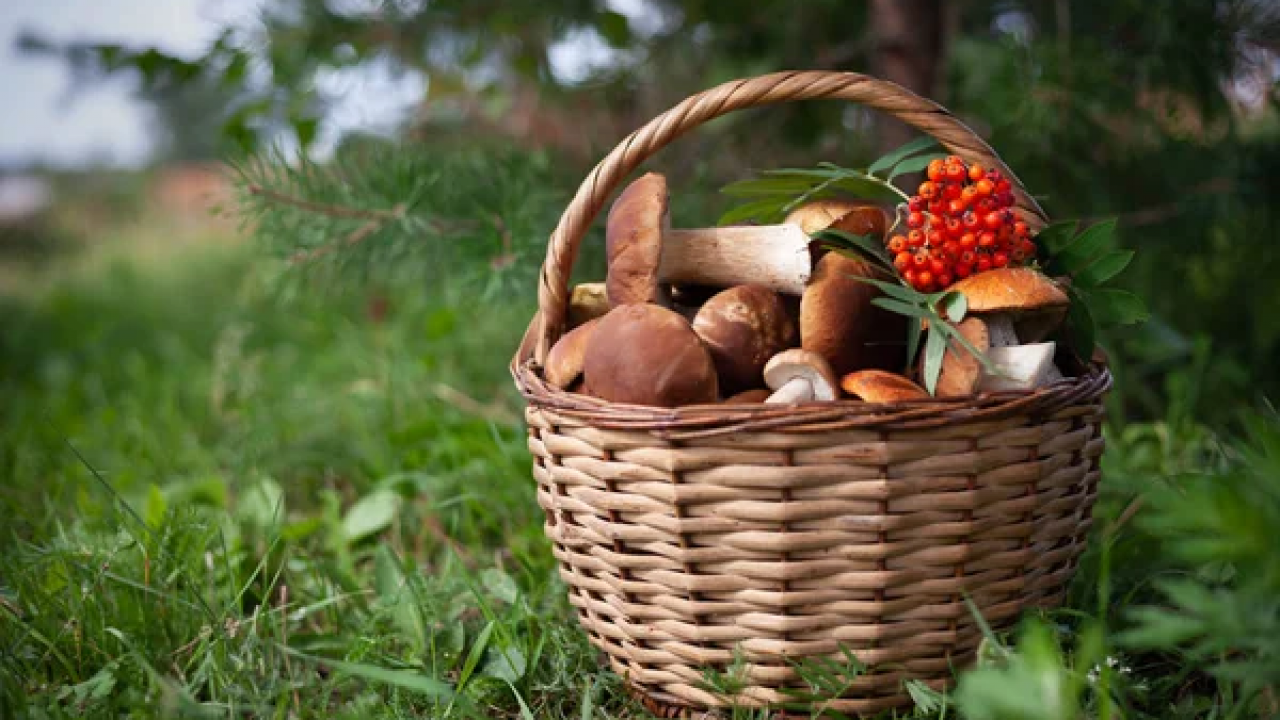
Every year, thousands of Kazakhstani residents head to forests and mountains to pick berries, mushrooms, nuts, and medicinal herbs. However, as the Ministry of Ecology and Natural Resources has clarified, picking some plants can result in fines, and in certain cases, even imprisonment, reports infohub.kz.
The rules for protecting and using plant life are regulated by several laws: the Law on Plant Life, the Forest Code, and the Law on Specially Protected Natural Areas. Ordinary citizens do not need permission if they gather wild plants for personal use. As the ministry explained, "individuals have the right to make general use of plant life objects to meet their own needs without obtaining permits for gathering wild fruits, nuts, mushrooms, berries, medicinal raw materials, and other plant resources, except for rare and endangered plant species."
At the same time, the volumes collected for personal use are regulated by local norms approved by the representative body of the region or city of national significance. If the collected amount exceeds the established norm, the gathering is considered entrepreneurial activity and requires payment. There are no uniform limits for the entire country. The ministry noted: "The current legislation of the Republic of Kazakhstan does not establish uniform quantitative norms (limits in kilograms) for gathering wild berries, mushrooms, nuts, and medicinal plants for citizens' personal needs."
Payment rates for using plant resources are set at the local level, so rules may differ across regions. Control is carried out by territorial departments of the Committee of Forestry and Wildlife, state inspectors of specially protected natural areas, and forest institutions. Particular attention is given to the fire-hazard period and the season of mass forest visits.
Strictly prohibited is the gathering of plants listed in Kazakhstan's Red Book. Restrictions also apply in specially protected natural areas. The list of rare species is approved by the government and is publicly available. In reserves, national parks, and preserves, gathering may be completely banned or restricted depending on the functional zone.
Illegal gathering carries administrative and criminal liability. Under Article 370 of the Code of Administrative Offenses, a violation results in a warning or a fine of 7 MCI, and in a specially protected area, 30 MCI. For illegal handling of rare species, criminal liability applies under Article 339 of the Criminal Code. The penalty can be up to 3,000 MCI, correctional labor, restriction of liberty for up to three years, or imprisonment for up to three years with confiscation of property. If the crime is committed by an organized group or causes particularly large damage, the prison term increases to 7–12 years with confiscation and a ban on certain positions.
However, the ministry stated that they do not plan to introduce a fee for gathering wild plants for personal use: "Currently, the Ministry of Ecology and Natural Resources of the Republic of Kazakhstan is not considering the introduction of fees for citizens gathering wild berries, mushrooms, nuts, and medicinal plants for their own needs." Also, no proposals are being considered to tighten the current order. Analysis of the state of plant life is conducted constantly, and if necessary, changes will be made based on scientific justification and a balance between nature protection and citizens' rights.