

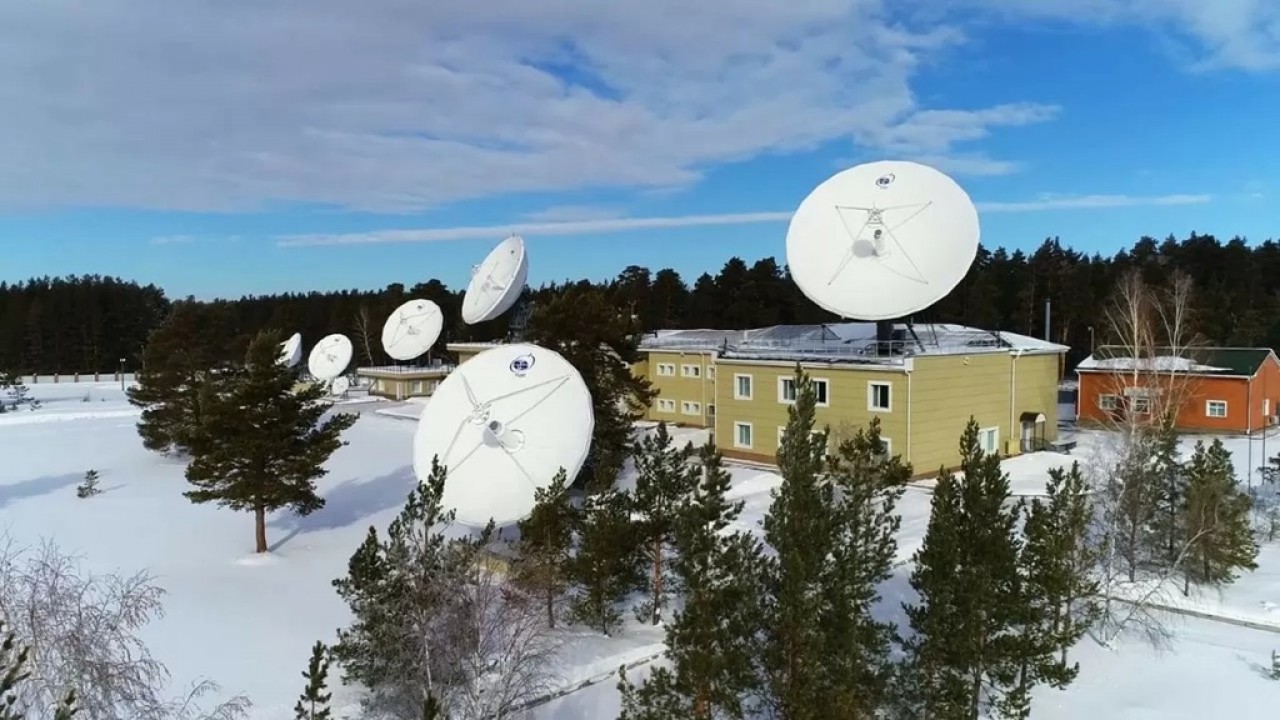
The government of Kazakhstan has allocated 10.4 billion tenge for the development of a new communications satellite, KazSat-3R. The spacecraft is intended to replace the existing KazSat-3, whose operational lifetime ends in 2029, and ensure uninterrupted operation of the national satellite communications system, reports infohub.kz.
Prime Minister Olzhas Bektenov signed the corresponding resolution. The funds will be used for the project to create a space communications system, which will become one of the elements of the country's digital infrastructure development.
The launch of KazSat-3R will help maintain stable operation of satellite communication and broadcasting networks, and expand internet access in sparsely populated and remote regions. Additionally, the project is expected to improve information security and strengthen Kazakhstan's technological sovereignty.
Currently, the largest domestic telecom operators and government agencies use the KazSat system's resources. 19 telecom operators and over 2 million TV broadcasting subscribers are connected to the satellite system. It provides data transmission, television and radio broadcasting, mobile communication, and internet access services.
The creation of the new satellite will be part of a large-scale effort to develop the telecommunications sector. Over the past two years, the share of Kazakhstan's population with access to high-speed internet has reached 99%. More than 4,500 rural settlements have been provided with high-speed internet, including areas where satellite technology remains one of the few ways to ensure connectivity.
In parallel, the country is implementing projects to expand fiber-optic communication lines in rural areas, develop 5G networks, provide mobile coverage along highways, and deploy modern satellite solutions.
The government also notes the growth of digital services: over 90% of government services are provided online, and own supercomputing capacities and the unified digital platform QazTech are being developed, which should become the foundation for further development of artificial intelligence and the digital economy.