

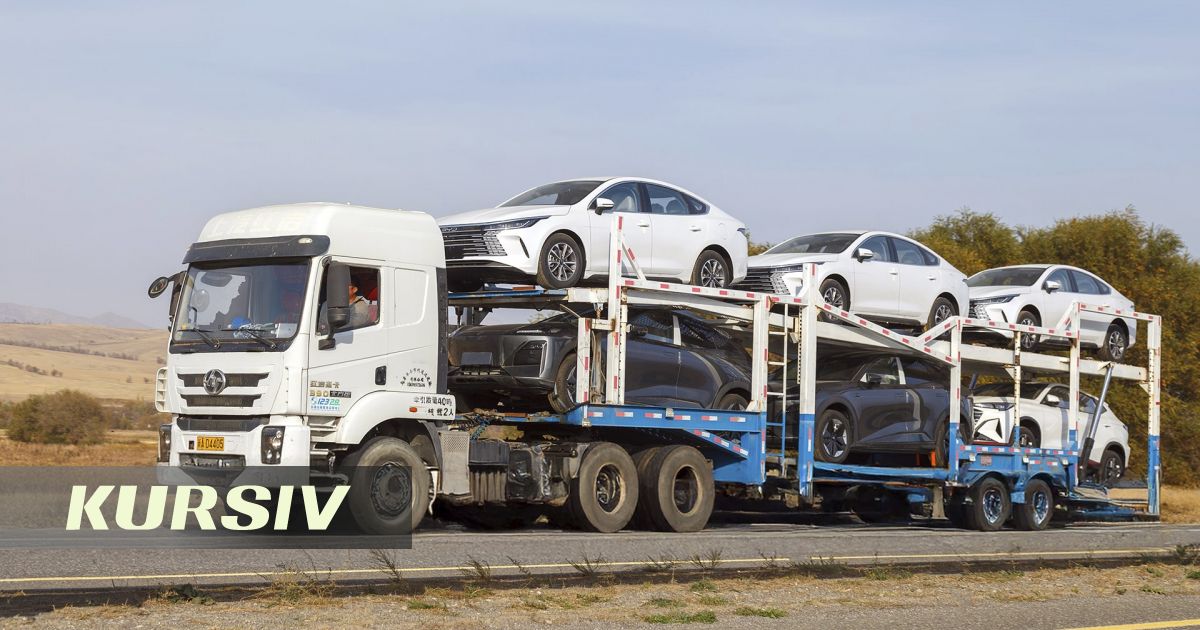
Russians continue to seek ways to reduce the cost of new Chinese cars by purchasing them in EAEU countries and importing them into the Russian Federation, reports 110km.ru. Popular destinations include Kyrgyzstan, Kazakhstan, and Belarus, but after stricter import rules, the final savings have become less obvious.
Kyrgyzstan is called the main transit hub for Russian buyers. According to the publication, in 2025, more than 53,000 new cars were imported from the country to Russia. The Bishkek market offers Chinese crossovers such as Geely, Chery, and Haval.
For some models, the price difference can reach 500,000–800,000 rubles (approximately 2.8–4.5 million tenge). However, to the car's price, one must add costs for transportation, paperwork, and other fees. Additionally, there are extra requirements when importing into Russia, and the rules for calculating the recycling fee have changed.
Kazakhstan also remains one of the routes for delivering Chinese cars to Russia. This option is often chosen by residents of the Urals and Siberia due to geographical proximity and developed automotive logistics.
At the same time, the final cost depends on the specific model, the car's price, delivery, paperwork, and mandatory payments. Therefore, comparing only prices at Kazakhstani and Russian dealerships is not sufficient.
Among the popular models among Russians, the publication names: Geely Monjaro, Chery Tiggo 7 Pro Max, and Haval Jolion. In Kazakhstan, such crossovers can be purchased 300,000–700,000 rubles cheaper than at Russian dealerships, but additional expenses can significantly reduce the savings.
Among the disadvantages of buying a car abroad are potential issues with documents and warranty. A Russian dealer may not provide full warranty service for a car purchased abroad.
Additionally, one must carefully check: VIN, service history, and the actual condition of the car.
A separate issue is the recycling fee. After the rule changes, the usual savings schemes through EAEU countries have become less advantageous. The cost of the car may also include delivery, document processing, and other mandatory payments.
There are also risks related to border delays, actual mileage, and the technical condition of the car.
Earlier, Kursiv Avto reported that Russian owners of cars assembled in Kazakhstan continue to receive demands from the Federal Customs Service (FCS) for additional recycling fee payments. Why cars in Kazakhstan are cheaper than in Russia can be read here.