

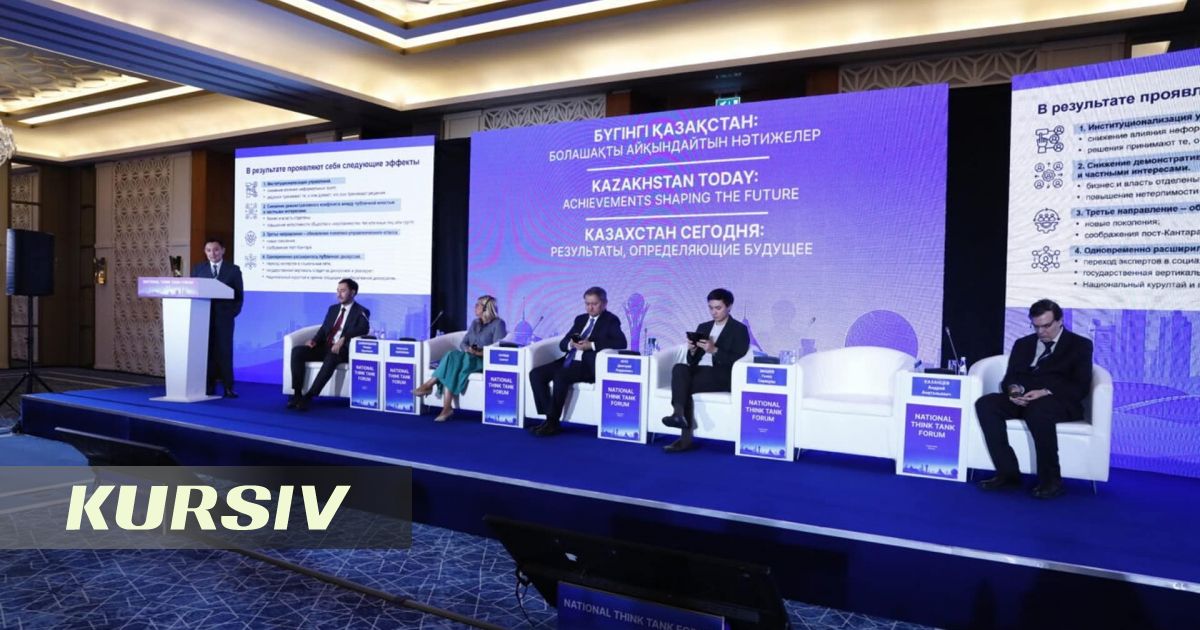
Nearly 86% of Kazakhs are satisfied with their lives, and more than half expect further positive changes. These data were announced by Zuldyzay Iskakova, Chairperson of the Board of the Kazakhstan Institute of Public Development, at the National Think Tank Forum in Astana, as reported by infohub.kz.
According to her, research shows that 85.8% of Kazakhs are satisfied with their lives, and 60% expect further positive changes.
"The next stage is the transition from measuring individual indicators to a comprehensive assessment of how demographic, social, economic, technological, and institutional changes convert into well-being and new opportunities for people," Iskakova said.
At the forum, representatives of government agencies and analytical centers discussed Kazakhstan's development results and the areas the country needs to focus on in the coming years.
Kazakhstan has maintained its leadership in Central Asia. Dastan Akebayev, Deputy Chairperson of the Board of the Institute of Economic Research, reported that by the end of 2025, Kazakhstan's GDP reached 159.6 trillion tenge, or about $306 billion.
According to the data he cited, Kazakhstan accounts for about 54% of Central Asia's total GDP, and real economic growth over the past five years was 21.3%.
Another notable indicator was non-commodity exports. Eldar Gumarov, Chairperson of the Board of QazIndustry, reported that in 2025, their volume reached $29 billion, an increase of 45% compared to 2021.
Kazakhstan wants to move from growth in indicators to quality. Forum participants separately discussed education, digitalization, and artificial intelligence.
Minister of Science and Higher Education Sayasat Nurbek reported that there are currently 33 branches of foreign universities operating in Kazakhstan, and more than 37,000 foreign students from 92 countries study at domestic universities.
"Combining quality education, international mobility of talents, artificial intelligence, and applied science forms the basis for Kazakhstan's transition to a knowledge economy," Nurbek stated.
Dmitry Mun, CEO of Q.AI, noted that Kazakhstan ranks 24th among 193 countries in the UN E-Government Development Index and is among the top ten countries in the online services index. The next stage of digitalization should be the National Artificial Intelligence Platform, AI agents, and data-driven governance.
Forum participants agreed that the country's further development should be measured not only by the number of built facilities, economic volumes, or accessibility of public services. They identified the main task as the transition to qualitative changes—improving the level of education, technological advancement of the economy, and the ability of state institutions to adapt to new conditions.